Five Big Series’

30 Mar

As the last of the March snow melts, the ball clubs on both sides of town prepare for opening day. The White Sox and Cubs will wrap up their exhibition schedules in big league ballparks this weekend. The Cubs will bid the Astro’s their National League adieu before heading to Pittsburgh for Monday’s opener. The White Sox will be a Hiawatha ride away in Milwaukee on Saturday, and Amtrak back Monday for their first game against the Royals.

Here’s a look at five big home series’ for the White Sox and Cubs.

Continue reading

DePaul Basketball: Vision 2020

20 Mar

It was confirmed with United Center owner Rocky Wirtz that DePaul had officially ruled out the possibility of the United Center hosting it’s Men’s basketball teams in the near future. The University will instead explore other options, the most talked about being a new building being built near McCormick place near 330 E. Cermak Rd.

The Tribune report has only reported what they’ve been told by United Center Officials; DePaul officials are yet to comment on the story.

If this is true, however, why completely rule out the United Center?

The McCormick Place deal is not even close to a reality yet. In fact, the Metropolitan Pier and Exposition Authority does not even own the land on which the stadium would potentially be built; it goes up for auction next month.

How serious the University is in talks with McCormick Place is uncertain. But is a South Loop arena what DePaul is actually looking for?

As reported by the DePaulia in January, there are two main elements the Athletic Administration is looking for regarding selection of a new Men’s Basketball home:

“We’re also looking for a building that will have DePaul’s name on it,” said Ponsetto, “and be approximate for students to be able to get to.”

The article goes on to say that DePaul wants a building of it’s name on it so it could be used for multiple purposes. The envisioned building would host not only DePaul’s men’s team, but also its women and host concerts, ceremonies and other events.

It would be logical to think that a building like this would have to be located near the Lincoln Park campus.

The University’s dormitories house 2,300 students in its residence halls, and the surrounding Lincoln Park and Lakeview neighborhoods are home to thousands more undergrads. The high concentration of students on the near north side makes it the central location of DePaul’s fan base. But for that fan base, traveling to suburban Rosemont to cheer on the Blue Demons is a long, inconvenient trip. The quickest option for fans is  to take buses, free of charge, which leave from DePaul’s McGrath Arena in Lincoln Park to the AllState.

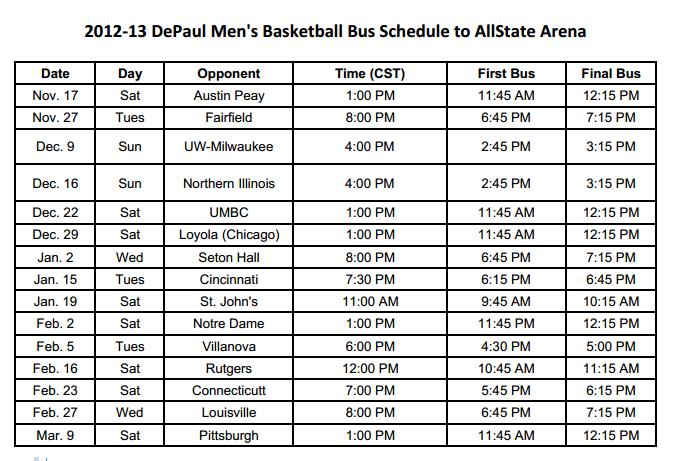
But even the buses are a half-hour ride along the Kennedy. And they only run from 1 hour and 15 mins before tip-off until 45 mins before tip-off.

DePaul Bus Schedule

As Ponsetto said, she wants an arena that is “approximate” for students to go to. A half hour, 15-mile bus journey is not approximate.

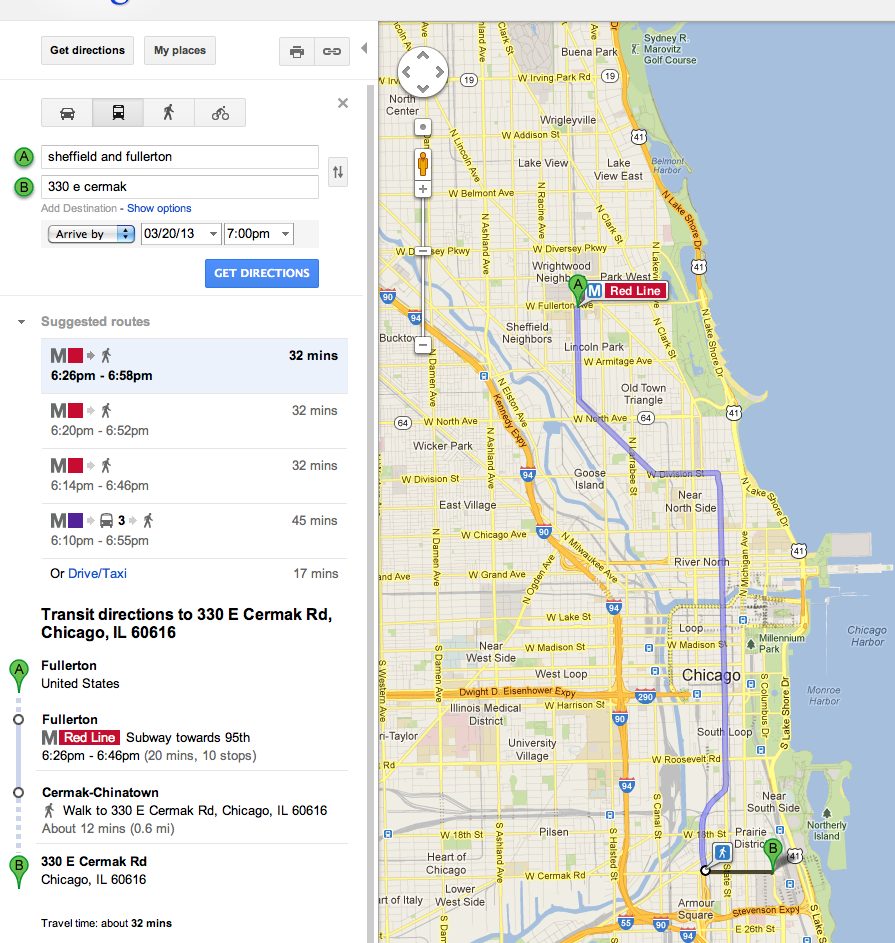
A half-hour, 9-mile CTA Red Line journey is no better.

From DePaul's Lincoln Park Campus to the Proposed McCormick Place Site

From DePaul’s Lincoln Park Campus to the Proposed McCormick Place Site

Even the drive from Lincoln Park to the South Loop would take fans 20 minutes, without traffic.

Essentially, a McCormick Place arena, though it would have DePaul’s name on it, would pose the same proximity and transportation issues as the AllState Arena.

Taking the problem and moving it south is not the answer.

To wait, however, might be.

Image


Last September, University President Rev. Dennis Holtschneider revealed Vision: 2018, his goals for DePaul over the next six years.

In September, DePaul embarked on Vision: 2018, a strategic development plan by University President Rev. Dennis Holtschneider and fellow administrators. The plan outlines the Two Strategic Priorities and Three Foundational Pillars which will guide the University’s development over the next six years:

  1. Enhance Academic Quality and Support Educational Innovation
  2. Deepen the University’s Distinctive Connection to the Global City of Chicago
  3. Strengthen Our Catholic and Vincentian Identity
  4. Foster Diversity and Inclusion
  5. Ensure a Business Model that Builds the University’s Continued Strength and Educational Excellence


Launched at the start of t he 2012-13 academic year, Vision: 2018 has already began making major improvements to DePaul. A new Theatre Building will open in September on the Lincoln Park Campus and McGaw Hall has been set to be demolished to make way for a new home to DePaul’s School of Music.

Absent from Vision: 2018’s construction goals is the building of a new basketball arena.

It’s not like DePaul has completely ignored athletics. They have upgraded all of their athletic facilities in the recent past. Wish Field, which hosts DePaul Soccer, and Cacciatore Stadium, which is home to DePaul Softball have both received multi-million dollar improvements in the past 15 years. The Sullivan Athletic was built in 2000 to be used as a training facility for Blue Demon Athletics, and serve as a home court for its women’s basketball and volleyball teams.

When Vision: 2018 finally runs its course (presumably by the beginning of 2019), the University may finally be in a good position to address its needs for a new basketball home. So potentially considering a move to the United Center for a short period time may be in DePaul’s interest until they’re finally ready to keen in on building their own arena close campus.

DePaul should settle for nothing less than what it wants, and what it needs.

After all, who knows what the Chicago landscape will look like in 2020?

Land could become available, and a strategy devised for the construction of a multi-purpose arena near campus.

After comments by Rosemont Mayor Brad Stephens, it isn’t completely ridiculous to rule out any options. Stephens recently offered the Cubs a plot of land near O’Hare airport, at no cost.


Could you imagine. DePaul basketball and Cubs baseball trading places?

Hey, anything can happen.


Video

Coming Up Next for DePaul . .

7 Mar

Judging by their 11-19 record, DePaul has not made much forward progress in Oliver Purnell’s third season as Head Coach. The team will finish  in the bottom of the Big East and fail to earn a postseason invitation for the sixth straight year. However, if we look at Purnell’s track record, in his last two head coaching stops (Clemson and Dayton), it was his fourth year in which his team really took off.

Next year’s roster will include a slew of seasoned senior leadership, and a freshman guard from Public League powerhouse Morgan Park who will have an immediate impact.


Just look at the banner that already hangs in his high school gym.

Billy Garrett Jr. set the Morgan Park High School record for points and assists.

Billy Garrett Jr. set the Morgan Park High School record for points and assists.


Here’s more on the story in this week’s DePaulia.

For more DePaul news, check out Good Day DePaul on Vimeo.

Let’s Put On Manti’s Helmet

17 Jan


Helmet

During a morning where Chip Kelly’s flight from Oregon to Philadelphia departure grabbed everyone’s attention, Deadspin ran a Statue of Manti that took everyone’s breath away. Manti Te’o’s “girlfriend” who allegedly passed away within 24 hours of his grandmother was a hoax. Wait what?

And Twitter went wild.

As the details become more clear, we try to piece together what exactly happened through what we know, and who we believe. Deadspin suggests that Te’o may have been very involved in the hoax. As CSNChicago reports, Notre Dame Athletic Director Jack Swarbrick voluntarily addressed the rumors in a press conference, in which he defended the linebacker. Te’o, who graduated from Notre Dame in the December, is all but gone from the forward-thinking Swarbrick’s radar, and he chose to put his reputation on the line by speaking out for Te’o.. The Chicago Sun-Times reports that teammates are supporting Te’o, including roommate Zeke Motta. Te’o’s family reportedly learned of the hoax on December 26th.

Let’s look at this through the eyes of Manti.

People meet on the internet every day in this world, whether it be through dating websites, Facebook, or a common interest in a website. With Manti’s portrayed upstanding character and devout faith, he would seem to be an easy target for someone to pull a prank (or a PR stunt).

There was a Lennay Kekua, in the form of a character. She was real in every way: her picture, her voice, her emotional involvement with Te’o . . except she was fake. Ronaiah Tuiasosopo has admitted to creating the fictional Kekua. Manti may have “met” her in 2009. But it wasn’t at Stanford. It was online. MySpace, e-mail, who knows, but Manti had someone on the other end of the line who pretended to be this amazing woman. We don’t know much about Lennay, but since she was not real, she could paint any picture of herself to Manti that she wanted, and she enamored him. He wanted to meet her.

Manti certainly never met her. But, guys, let’s think of things this way: When you’re dad asks you the typical question regarding your status with the opposite sex, who in their right mind would tell their father that he met this amazing girl online that he’s never met?

So lies were created. But who created them?

His family supported him. Everything seemed to be going well for Manti; he was an outstanding student and starting linebacker at the University of Notre Dame. The media had already christened another golden boy. He even passed up NFL money to stay his senior year at Notre Dame. There was no reason to doubt him. So when his family commented on the girl, they may have been suspicious, but they stuck by Te’o. What reason did they have to not believe him? He’d look crazy if he had started a relationship with a girl in 2009, and in three years had never seen her. So he lied. Out of embarrassment? Out of firm belief? Out of blind hope? Somewhere along the way, he got way too entrenched in his own lie.

There was likely some real person pretending to be Lennay Kekua. The detailed descriptions of phone conversations and teammate’s support suggest it that that part of the story may be true. But Manti’s stardom drew more attention to him. People wanted to know more about him. His narrative was constructed. Can we fault the media for that? Yes and no. They were just doing their jobs, giving us what appeared to be a great narrative of overcoming grief and leading the team to the title game. They did, however, eat it all up. They caught wind of this sensational story and further sensationalized. Very few photos of Kekua exist, that should have been a red flag (then again, it didn’t stop Manti).

Once he discovered the truth in late December, Te’o was devastated. Imagine the shock, grief and disbelief Te’o felt upon discovering the news.

How does a Heisman runner-up tell his millions of fans, weeks before the BCS National Title Game against Alabama, that he was the victim of an elaborate hoax?

You don’t.

That’s none of your fan’s business. It’s a deeply, deeply personal tragedy that you’d like to keep to yourself and your closest friends and family. A situation as unbelievably embarrassing as this is something most of us would hope to bury 100 feet underground.

All that has been reported about when Te’o actually learned Kekua was a hoax, is that he “received a call from “Kekua’s Sister” on December 6th, saying Lennay was not dead and she wanted to rekindle the relationship. ”

Imagine that world of confusion Te’o was now just thrown into. The Heisman ceremony is in 2 days, and his mind was just completely criss-crossed by that phone call. He wasn’t even sure himself. And why would he let anything leak days before the Heisman ceremony? It would have completely confused everyone and ruined his chances?

During the Heisman ceremony, when Fowler brought up his girlfriend, what is he supposed to say? On live national television,

“Actually Chris, I received a call from my girlfriend’s sister saying she is alive now. I’m kind of confused about this whole situation. I don’t know what’s going on, I’m just happy to be here in New York and a candidate for this prestigious award.”

Te’o didn’t have an option. He needed time to grasp all of this, just like the rest of us. So when he finally came to terms with what happened, he developed a plan to tell the public in a manner that would be easiest to digest. Except Deadspin beat him to the punch.

So who’s at fault here?

The Media

For creating the gripping Te’o narrative.

For failing to diligently fact-check.

And though kudos goes to Deadspin for uncovering this hoax, things would have been a lot clearer if Te’o had been able to handle this situation instead of the media leaking the tale, and causing a nation-sweeping stir. Then again, would we have ever found out if Deadspin didn’t come out with it’s findings?
Image

The Catholic 7’s Next Move?

13 Jan

When DePaul, Georgetown, Marquette, Providence, Seton Hall, St. Johns and Villanova decided to leave the Big East a month ago, it was (and still is) uncertain what the schools will do regarding their conference fate.

Since the announcement, ESPN’s Darren Rovell has reported that the “Catholic 7” will look to add three-to-five schools in order to form a 10- to 12-team conference. This will make them a balanced conference, and attract a power conference-type TV deal. The question, however, is who should get the invite?

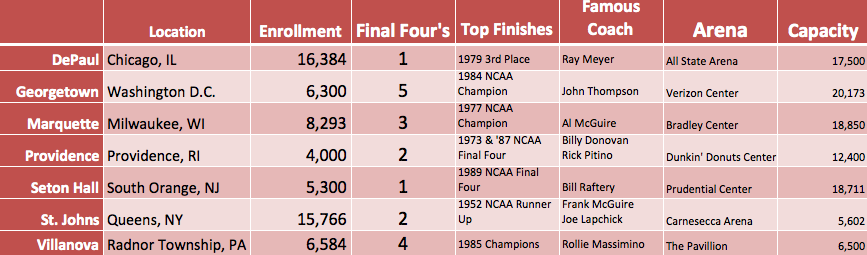
The seven former Big East schools share a lot in common. (Click to enlarge)

Image

They’re all mid-sized Catholic Universities located in or near major urban areas with storied basketball traditions and no Division I FBS football program. There are several schools in the A-10 and Horizon League that fit that description.

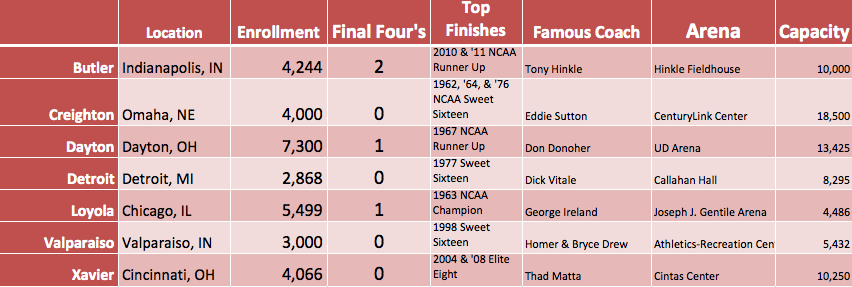
Image

Dayton and Xavier would be natural fits to join the Catholic 7. The two schools have a combined nine Tournament appearances in the past ten years, with Xavier reaching the Elite Eight in ’04 and ’08.

Butler might be the toughest catch, but it would be worthwhile. They would be the only non-Catholic school (they’re affiliated with the Christian Church). That aside, Brad Stevens is looking like the next great college coach, and they would add two more Final Four appearances to the Catholic 7’s existing 18.

Loyola is a program that seems to be on the rise, along with their North Side of Chicago neighbor DePaul. Renew that rivalry in an already basketball crazy town.

Valparaiso and Detroit also have a history with many of their Midwestern Catholic brethren. At roughly 3,000 full-time undergraduates, both schools have lower attendances than any of the school’s mentioned. Both schools are at the top of the Horizon League. Detroit has a bona fide star this season in Ray McCallum Jr. and who can forget current Valpo head coach Bryce Drew‘s 1998 buzzer beater (and subsequent swan dive.) His father Homer was his coach that season, just as Ray Jr. currently plays for Ray Sr. at Detroit.

Another school that would fit the bill could be MVC giant Creighton. The Blue Jays have a formidable father-son duo themselves in head coach Greg and high-scoring guard Doug. They’ve gone dancing eight out of the past fourteen seasons.

With the conference realignment epidemic crossing over to the basketball side of things, Depaul, Georgetown,, Marquette, Providence Seton, Hall, St. John’s and Villanova have a chance to form a basketball that is as strong top-to-bottom as any conference in the NCAA.

In the coming months, we will see.

Quote

Johnson & Johnson Tape and Beer, and Not Neccessarily in That Order

18 Dec

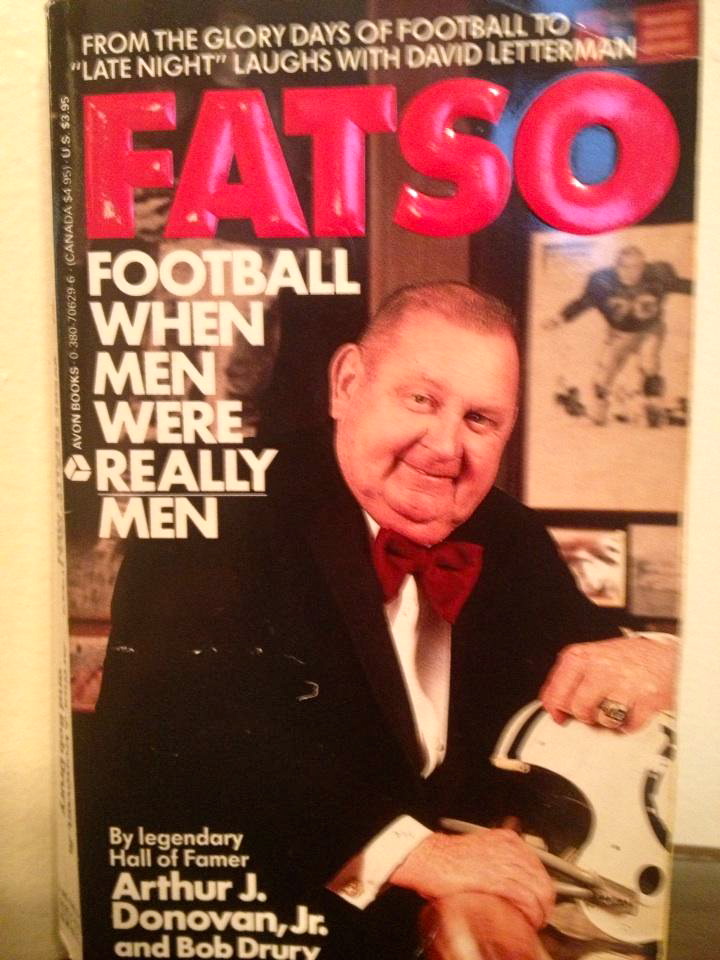
Football When Men Were Men

  “One of the results of this high finance in football today is that the guys don’t hang around together the way they used to when I played. I mean, you just don’t see quarterbacks drilling forward passes into the lineman’s schnozzes to slow down their rushes and then buying you a beer afterward, the way Norm Van Brocklin used to drill me and buy for me.

-Art Donovan, from his 1988 book, Fatso

Image

 Could you imagine elite quarterback’s like Matt Ryan or Tom Brady drilling defensive linemen in the face then buying them a few rounds after the game?  Or guys like Jim Harbaugh “borrowing” a taxicab to drive an over-served teammate back to the team hotel?

“We were playing an exhibition game in Milwaukee once, and a bunch of us, naturally, we’re drinking in a local bar. Around midnight, most of us left, but Shula stayed there with Carl Taseff, another defensive back. We were back up at the hotel for a little while when suddenly the cops showed up. Uh-oh. One officer walked up to me and said, “We know one of you Colts stole a taxicab. Who was it?” What happened was Shula and Taseff honked the horn of a cab outside the bar, but the driver didn’t show up. So Shula put Taseff, who was stewed to the gills, in the back of the cab, put the cabbie’s hat on, and drove back to the hotel. And you know, they never would have gotten caught, except Taseff was slow getting out of the cab. He wanted to pay Shula the fare.” – Fatso

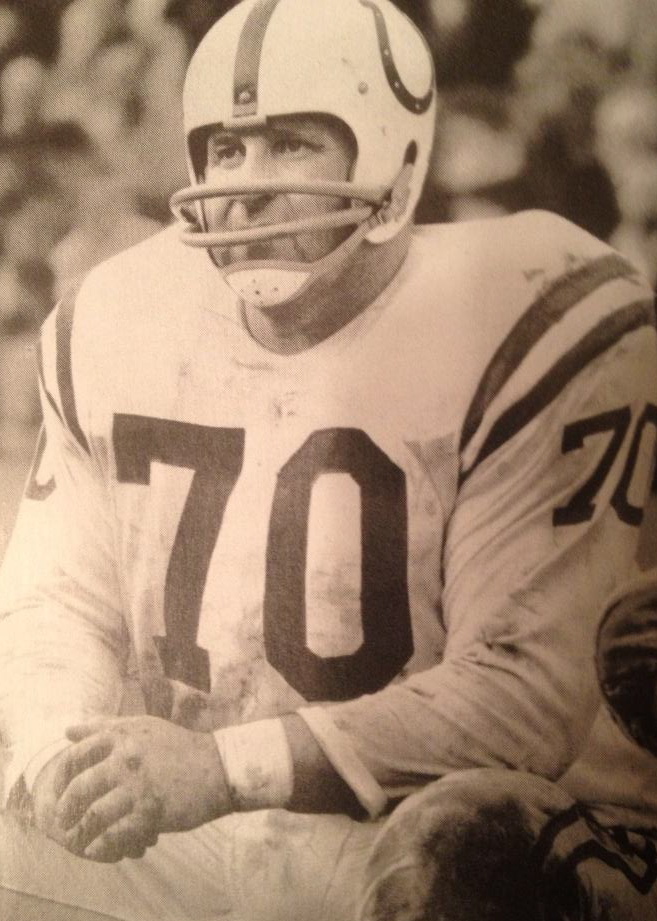
  According to Art Donovan, the league was built upon two things in those days. Johnson & Johnson tape, and beer. A time where toughness and discipline were tops on the list of what made a great player, and year-round training was unheard of. These guys were playing the game because they loved it. The salaries were modest. Donovan signed his first professional football contract for an unguaranteed $4,500, which would be $76,800 in today’s worth.

 Image

-Darrel Norenberg/NFL

  Not only were they working class, but the majority of them went overseas in WWII defending our country. Hall of Famers like George Halas, Chuck Bednarik, Marion Motley and Otto Graham all fought. It was a different kind of man who played pro-football in that day. As David Rowe writes,

“The commercialization of sport and the commodification of  athletes (transformed from casual ‘players’ into sportsworkers selling their athletic labor power as ‘products’ bought and sold on the sport market) opened up a deep schism within the institutional ideology of sport itself.”

Sport Culture and the Media (2004)

  Well, I’m not here to provide any social commentary, I’m just here to share some good stories from Art Donovan, the League’s greatest story teller. His nights on David Letterman were a riot every time. But the all-time greatest Art Donovan story comes from 1945, when he was stationed in Guam, awaiting the call to invade Japan.

“One night we were working all night on the docks near Agana, Guam’s capital, emptying cargo ships and getting all this stuff ready for the invasion of Japan. We were sure it was going to be ordered any minute. At about four in the morning, I and a couple of other guys found a case of Spam down in the hold of a troop transport. So I grabbed it, loaded it onto our truck, and finally stashed it under our tent.

Well, the next day there was a typhoon, a real gullywasher, and wouldn’t you know it but that’s the day this young lieutenant just in from the States, a real greenhorn, picked to pull tent inspection. Jesus Christ, can you imagine tent inspection in a war zone? Anyway, he looked under the floor of our tent, and the rain had washed away the dirt we had dumped on the case of Spam. He said to us, “What’s that?” Nobody said nothing, so he ordered us to pull it out. Finally he asked, “This is government property. Where did you guys steal it from?” Still nobody said nothing. He asked again, “Who does it belong to?” After a long pause, I told him it was mine. He asked me where I got it, and I lied to him. I told him I found it on the side of the road.

The greenhorn left, and the next thing I knew a runner came up and told me to get dressed in khakis and go see the regimental adjuttnt. The adjutant’s name was Joe McFadden, and he was from New Jersey. He was also the former quarterback of Georgetown’s football team. I stood there shuffling my feet and finally Major McFadden asked, “Donovan, where’d you steal the Spam?” I told him I found it laying by the side of the road and he said, “Goddamnit, Donovan, don’t lie to me.” So I admitted that I took it from the hold of a troop ship we were cleaning out. And he said to me, “What were you going to do with it? Sell it to the gooks?” And I said, “No sir, I’m going to eat it.” He said, “I told you not to lie to me. Nobody eats that crap.” I told him, “I do. I like it.”

Then he asked me where I was from. I told him New York, and he asked me if I was in any relation to the fight referee. I told him that ref was my father. Now I figured a McFadden from New Jersey who played football at Georgetown is not going to throw a Donovan from New York who played football at Notre Dame into the brig over a case of Spam. Sure enough, Major McFadden told me he was going to give me a week to eat the whole case, or, as he put it, “your ass belongs to me.”

I ate the whole case in six days.
Thirty pound of Spam. I was the company hero. The cooks used to come over to our tent and put the Spam in batter and cook it up for me. Twenty-four hours a day I’d be eating Spam. And loving it. They let me off the hook and, I still have a soft spot in my heart for Spam.” 

Fatso

Aside

Loyola Outlasts Fenwick

10 Oct

There was nothing ordinary about Loyola’s 49-28 win over Fenwick Saturday in Wilmette.  In a game that saw each team throw an interception on their very first play from scrimmage, the Ramblers (6-1, 2-0) wore out the Friars (5-2, 2-0) in the crossover matchup of Catholic League division leaders.

“We just came out flat.” Loyola QB Peter Pujals said.   “Flat” could be an understatement. Pujals completed four of his fist eight passes; two to Loyola receivers, two to Fenwick defensive backs. Two big gains were taken away from the Ramblers as well, as they committed four penalties amassing fifty yards.  After two quarters of play, the Friars stood even with the 2nd ranked Ramblers, 14-14.

“We wanted to come out in the second half, and treat it as a new game”, said Pujals, who finished the day 15-31 for 264 yards. That the Ramblers did when Kristopher Coker returned the opening kickoff for a 95-yard score.  The Friars, however, fought back with a big play of their own.  After recovering a Pujals fumble in Loyola territory, Fenwick QB Gino Cavalieri scrambled away from the Loyola pass rush, and threw a prayer of a pass to WR Danny Lattner, who readjusted to the ball to make a spectacular catch in the end zone.

It wasn’t until their first drive of the fourth quarter that Loyola was finally able to pull away from the Friars. In response to an 80-yard touchdown pass from Cavalieri to WR Patrick Regan to begin the fourth, Pujals led the Ramblers on an 80 yard scoring drive.  On 4th and 3 with 9:43 on the clock in a tie ballgame, Pujals scrambled for a first down and put the Ramblers at Fenwick’s doorstep.  The very next play Pujals connected with senior two-way starter Luke Ford on a 14-yd fade route to the corner of the end zone, to put Loyola ahead for good.

The Friars were ready for the Ramblers.  They quickly took a 7-0 lead on a blocked field goal returned 90 yards by defensive back Keshaun Smith.  The Fenwick defense stifled the Catholic League’s top offense early, and continued to play strong late into the fourth quarter.  “Our defense is always ready to step up. When we’re called, we’re always ready”, said Smith.

The Loyola defense handled the Fenwick ground game, dominating the line of scrimmage the entire game, allowing only two runs of over ten yards.  One of those runs was a 32-yd dash by Robert Spillane, who turned the corner on the Loyola defense and ran up the sideline virtually untouched, tying the score at 14 just before halftime.

Loyola may have been looking ahead to its final two games against fellow CCL Blue members Brother Rice and St. Rita, or even the top-level teams that await them in the 8A playoff bracket. Pujals says the Ramblers will attempt to maintain their focus, and finish the season strong, “We learned we need to take it one game at a time, and focus on Brother Rice next week and we’ll go from there.”

The Friars look to close out their 2012 regular season with a CCL White division title, and look forward to an always tough 7A pool.  The Friars are one win away from a guaranteed playoff berth, and the only obstacle that stands in their way of a division title is a Week 9 Showdown with De La Salle on 35th Street.

Dominating the Digital Domain

26 Sep

The capability to tell a vivid story has been vastly increased by the Internet. Writer’s are not limited to 400 or 600 words, producers are not limited to simple video clips. The ease of generating multimedia content combined with the sheer magnitude of information and images  the internet offers make it easier than ever to grab audience attention.

However, as Homer Simpson so eloquently put it, “(It’s the fourth quarter) The Lord gave us the atoms. It’s up to us to make ’em dance.” The stories are there to be reported, it’s up to individual journalists to make them sizzle.

We have the resources available now to tell stories that are more vivid, more bold, more lifelike.  From databases, to calculation tools, to photo libraries, journalists are using every tool available to them to round out their work and deliver a total package to the audience.

Two journalist’s I follow very closely across several media is Chuck Garfien and Chris Rongey.  Each hosts the White Sox pre-game and postgame shows on TV and radio respectively.  In addition to their daily lead in and wrap up duties, the two are very keen to social media.

Garfien & Rongey are especially adept Twitter, as each has a strong following.  During our home game batting practice, for instance, Garfien might tweet about the mammoth shots Tyler Flowers was hitting or how John Danks said his arm felt last night. This is information that a hungry audience might like to know, but not read 200 words about.

Rongey is more active than most when it comes to tweeting back to fan questions and comments.  On game days, he is active online for hours before the first pitch, while he’s watching from the press box, and well after everyone’s left the ballpark.  When his own knowledge may fail him, database tools such as baseball-reference.com come in handy. Hidden trends and startling statistics can be drawn using the site and its countless number of filters.

Similar to baseball-reference.com, yet much more lucid is fangraphs.com, which allows users to take stats and splits, and visualize them using a different number of graphs and charts.  Fangraphs.com also uses video replay, still frames, and .gif’s to bring to life its content; Jeff Sullivan uses all three to point out that only one triple has been hit by right handed batters at Progressive Field this year.

Twitter is one of the best ways to reach audiences with content, or, to be your sole source of content. Andy Gray uses his twitter solely to post old Sports Illustrated photos on a daily basis. His pictures are fascinating and topical, ranging from celebrating Mr. T’s birthday with entire gallery spanning four decades, or photos of the best tailgates around the country on an October Saturday.

The opportunities are endless, and the resources are plenty. It’s up to the journalist’s to master their digital domain.

Online Content Creates More Vibrant Legacy

12 Sep

I recently watched a PBS Frontline documentary on high school football that outlined the immense pressure some programs are under to win, and the rising health risks that are becoming more and more prevalent in the sport at this level.  The program instantly grabbed my attention, as it told the story of several players who were directly affected by heat stroke or concussions that could/should have been prevented.

As the program went on, my curiosity was sparked more and more. They touched on topics such as state regulations on high school sports safety and the heavy recruitment of stud athletes, and I wanted to know more, I had questions about the documentary that I wanted answered. Sure, I could go on Google for a few hours and try and look up the information I was looking for . . or I could simply scroll down the page and find the answers to nearly all of my questions provided by PBS. This new style of complete coverage in media supplies its audience with content one wouldn’t normally get from traditional, or “legacy” media coverage(meaning the New York Times newspaper or an ABC News broadcast on television).

The PBS Frontline website provides a wealth of information not contained in the documentary. Whether I wanted to know the specifics of concussion studies mentioned in the documentary, or the fate of some of the star players that the program followed, it’s all there at my fingertips.  Whereas legacy media coverage ends when the last line in print or an anchor’s sign off, this new style of coverage goes deeper, and offers its audience much more than ever before.

Another program I viewed on the PBS website concerning the NCAA Basketball Tournament was equally as riveting, and equally as question-raising.  This documentary was concerned with the millions of dollars the non-for-profit NCAA makes on its annual Tournament. The most gripping interview was that of Mark Emmert, NCAA President.  Though only a few clips of it aired on the program, the transcript of the entire interview can be found on the Frontline website, along with every other interview that aired in the program.  Years ago, this type of content was never available to the audience. Online coverage allows a story to be told more in-depth and with greater detail than ever before.