We could hit one more bar on our way out of town, or get to the airport early. Since we were all the way on the West Coast we opted to go for the one. We arrived at the Philosopher’s Club in San Francisco’s West Portal neighborhood. A fella a few stools over from us overheard our San Fran-quest to hit a bunch of iconic bars, so we rattled off the other places on our list.
“Ehh you don’t need to go there. It’s a fag bar,” a bar patron deterred.
I was a bit taken aback. I wasn’t expecting any LGBTQ hate in San Francisco, a city with such a history of Pride. So I nodded politely and sipped my Anchor beer.
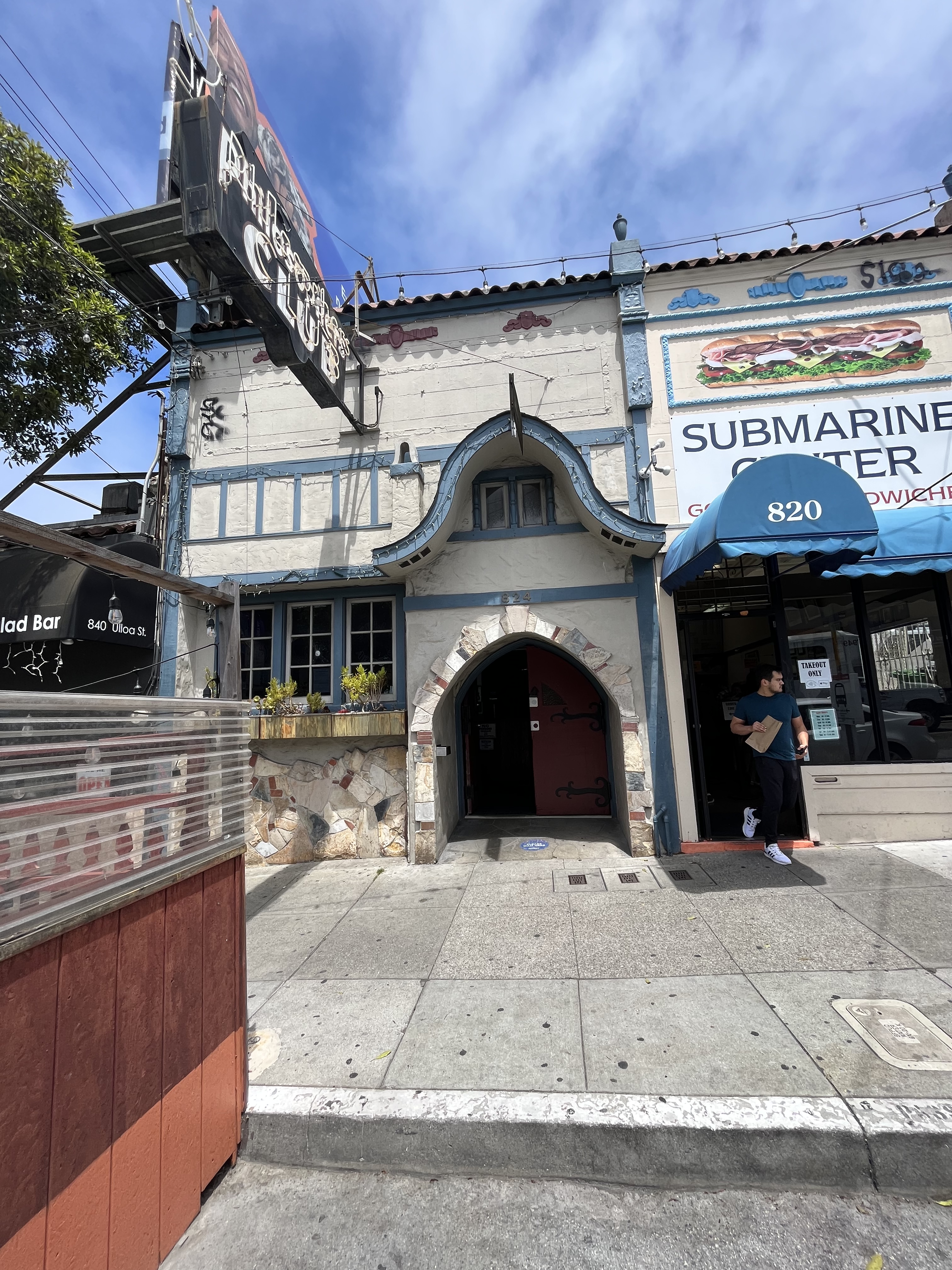
The Philosopher’s Club in San Francisco was on my list of places I had to stop while in town, and despite the click-baity, rage-bait lede, it was a fantastic bar. I just use that to point out for y’all to realize, how far you think we’ve come, we’ve bit a ways to go.
I’d actually circled the Philosopher’s Club high on my list to of bars to visit (as I did Twin Peaks, the pub the barstool bigot bemoaned about), but because it was an outlier on our weekend concerned with A’s games and Anchor beer, we’d have to carve a route to get there.
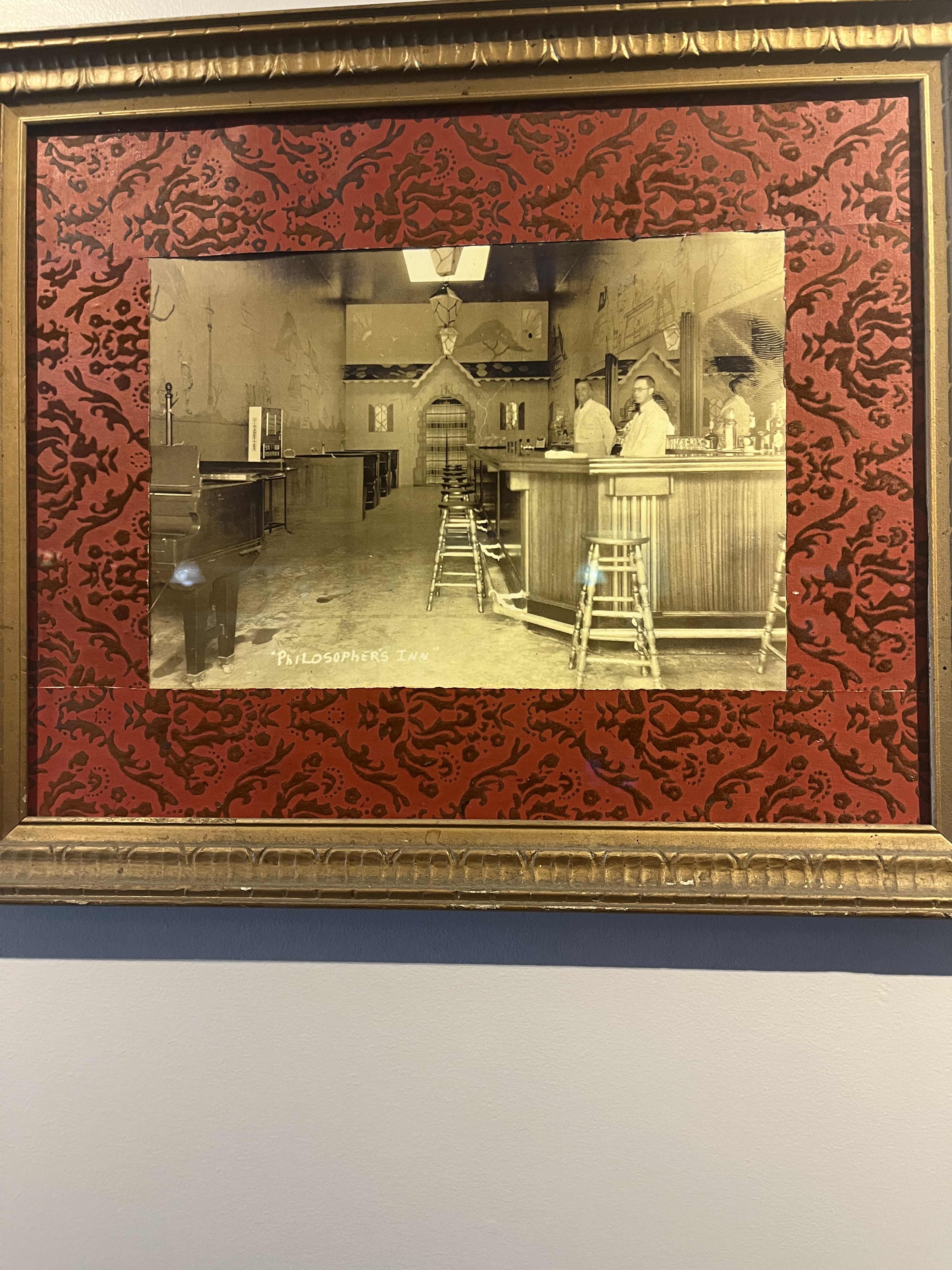
The Philosopher’s club got her name in the 1930’s when it opened after Prohibition. I didn’t catch the exact origin of the name, but I think it’s fair to assume it’s a dig at the teetotalers who just lost the battle for booze.
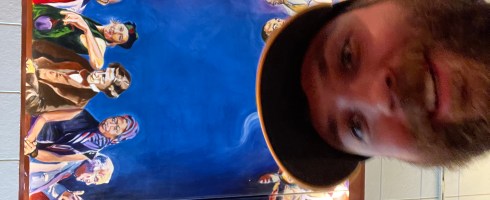
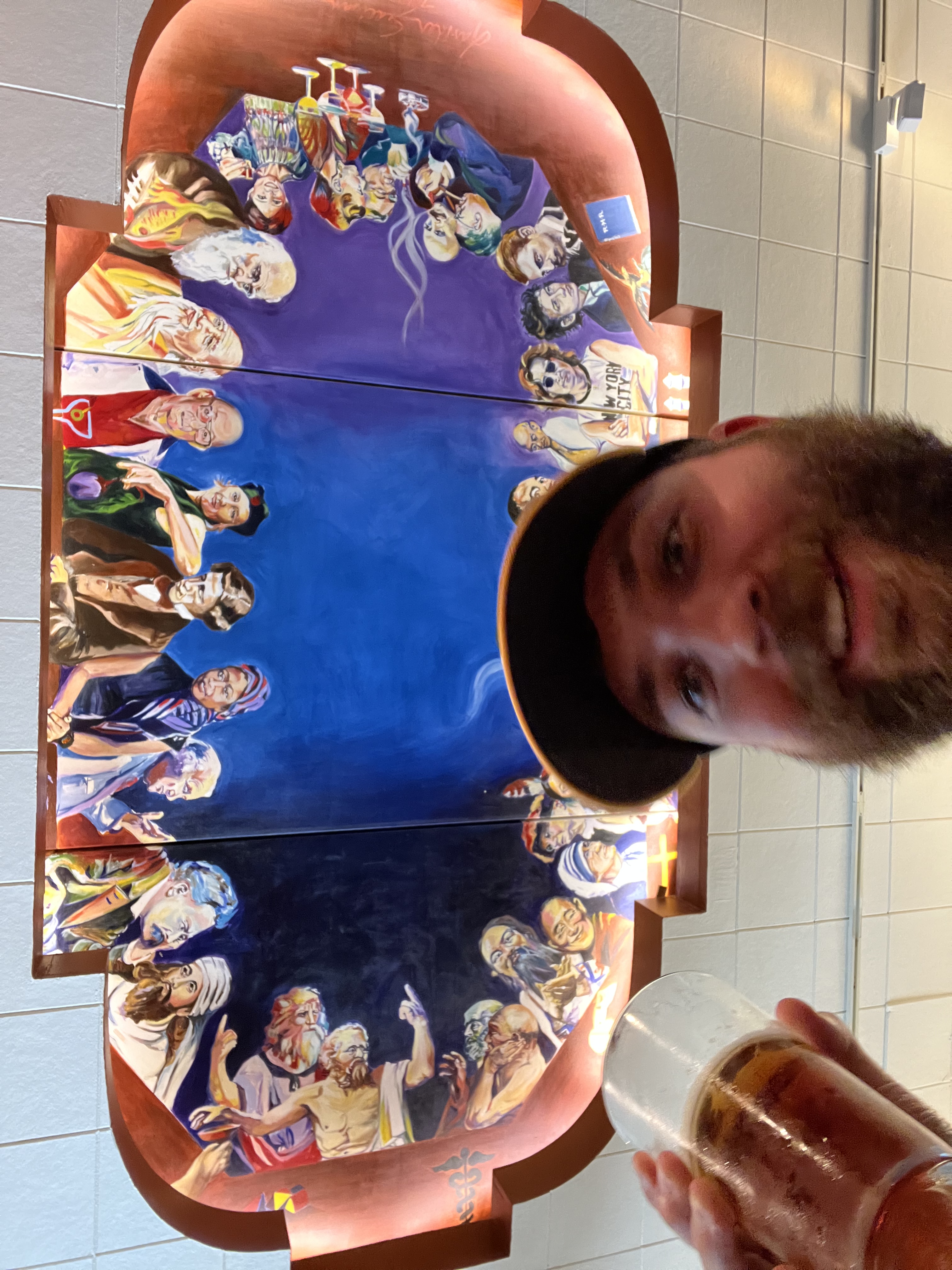
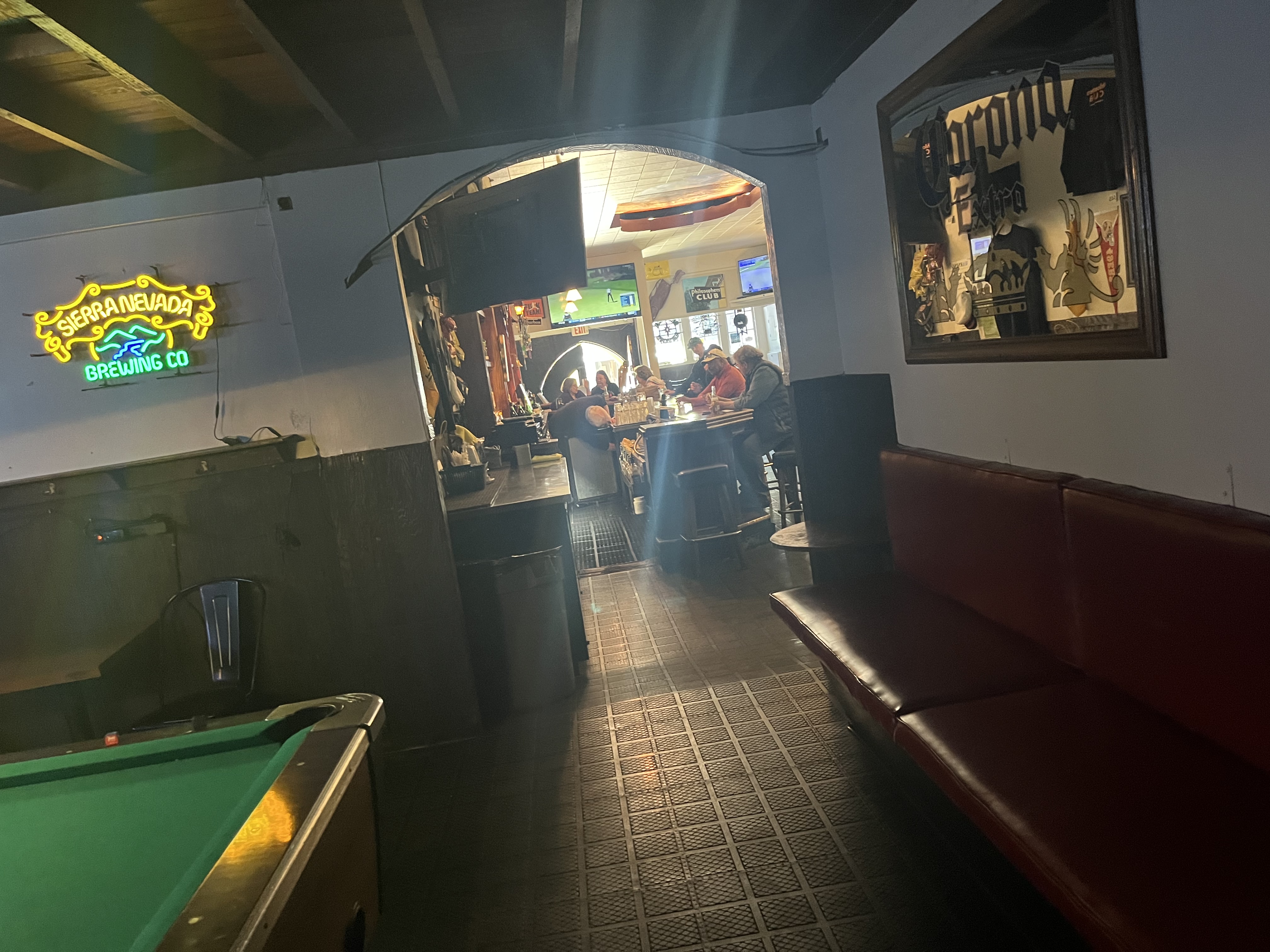
The entrance is cavernous, carved right out of the winding hillsides of West Portal. The arched awning and stone-lined doorway lead you into one of the best places to watch (and lay some money down on) the Niners while being judged by 32 of the world’s greatest thinkers. Though we were there on a summer Friday, we could tell that the Philosopher’s club was really a place that shines on Sundays, and the mural only enhances the atmospheric pressure.
The famed mural at Philosopher’s club features nearly three dozen of the greatest thinkers in the recorded history of mankind. Freud. Gandhi. Socrates. Lao Tzu. Whole gang is here. We imagine gamedays. Pitchers and nachos. Wall-to-wall 49ers fans. And with its history as a numbers room, the full spectrum of human emotions is observed by philosophers, who peer down as if in a gallery in an hospital’s operating room.
Imagine you look up in despair toward Nietszche pointing and laughing yet another lost halftime parlay (and Joseph Campbell encouraging you to double down on the 2nd Half over). And if you don’t get that drunk, surely the regulars will roast your Brock Purdy stanning-ass.
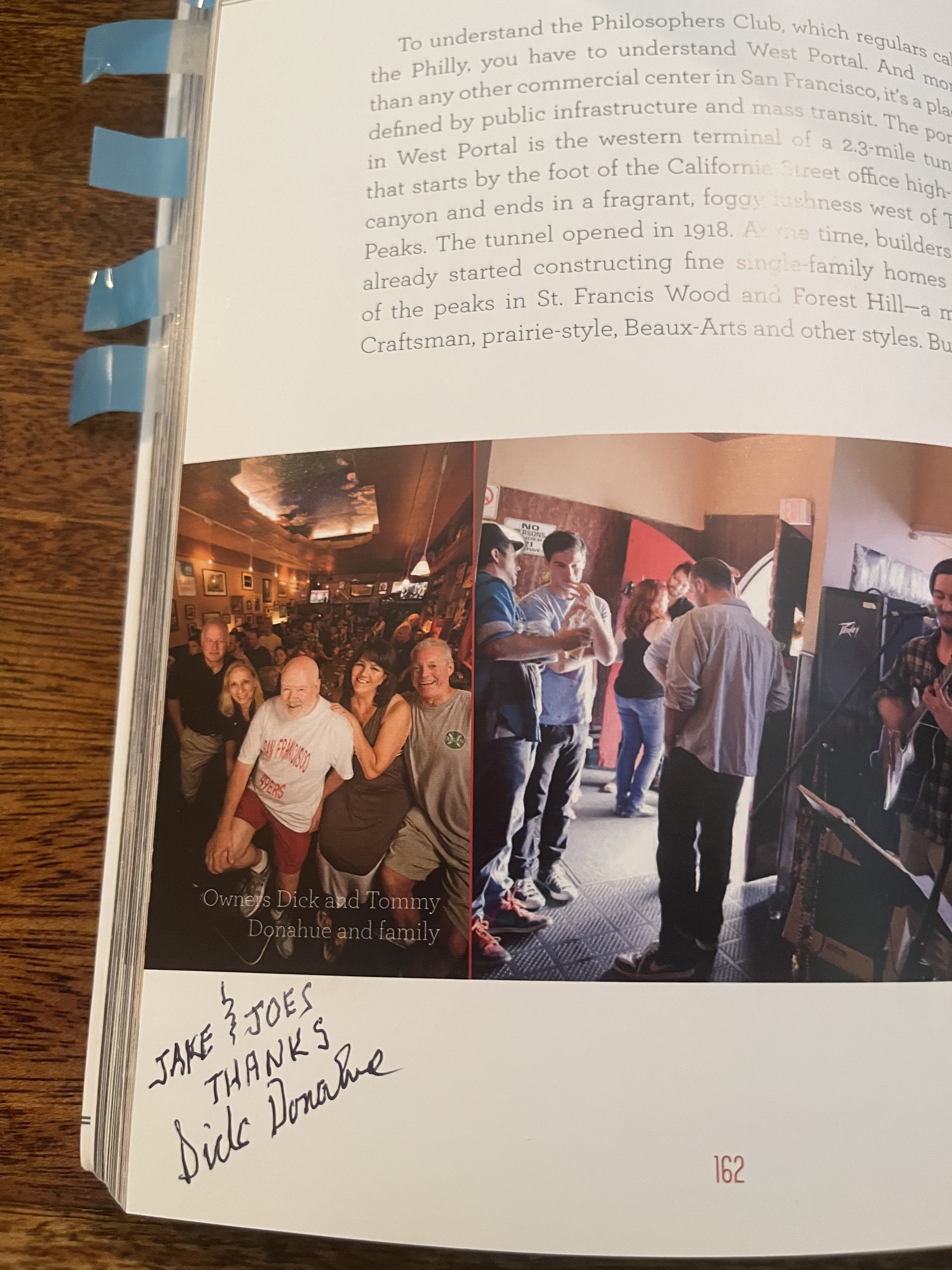
We ordered a couple Anchors’ on draft and plopped our guide on the bartop. The 138-page book that steered our barcrawl had guided us to some of San Francisco’s greatest dive bars. Why not trust it for one (or two) more hurrah’s before we left town.
And boy, the Philly, as the cool kids call it, did not disappoint.
The bartender hadn’t the slightest idea that the bar was in the book. Or that the book even existed. He pulled out his cheaters and flipped through the entry. Then he began to flip through the book and give us the 3 line history of every bar he’d wound up in at one time or another. He moved page to page feverishly, and then through the index. Rapid fire. Quickly spitting out names, and memories, and “My fuck!”’s. Tales of wine, women and song. The good, the bad and the ugly. He was taking us on a tour of San Francisco dives at a mile a minute. It was that kind of way locals speak when you ask them about their favorite part of their town and they yammer gleefully for the next hour. And his favorite part of San Francisco was its bars. And that was quickly becoming my favorite part of it too.
He flipped back to the Philosopher’s Club entry of J.K. Dineen’s High Spirits:Legacy Bars of San Francisco.
“Hey, there’s Dick!” he exclaimed. “I gotta show him this. That picture’s right over there. Oh wow!’
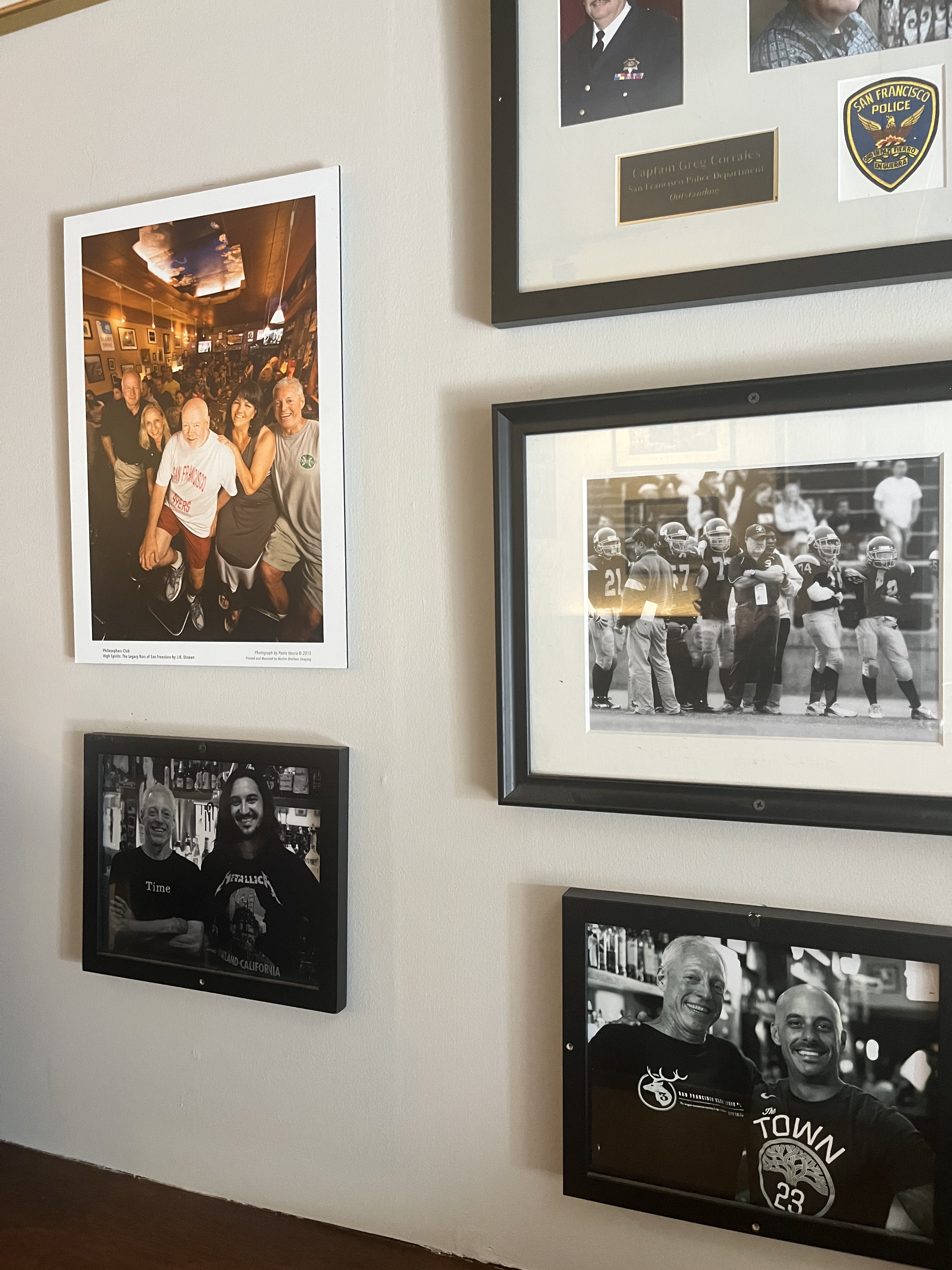
I strolled over to the bright side of the bar and sure enough, the same picture in the book was hanging on the wall. Dick Donahue grew up blocks from the bar and bought it a while back. To be honest, I didn’t know San Francisco had such a rich pub & tavern history going into the trip. I’d picked up John Barleycorn for the trip, but hardly had time to read it on the trip. The city’s role as a major port in the west during the last 200 years and the mass Irish immigration, that’s the perfect storm for neighborhood pubs like the Philly.
We met Dick and he could not have been more of a gracious guy. Chatted with us, bought us a round and gave me a free poster of the Philosopher’s Club mural.
I was quietly impressed with the selection of philosophers selected. In High Spirits, the mural’s artist (and bar’s co-owner) Deborah Sullivan said “I wanted someone of every culture, ethnicity” to “give meaning to the bar’s name.” One of those connections I absolutely loved was the fact that she included one of the bar’s patrons in the mural: Jacob Needleman, who taught philosophy at nearby San Francisco State University for 50 years and stops by the bar on occasion.
Mother Jones, Bob Dylan, and Martin Luther King are my favorite philosophers to make the cut.
Not in love with John Lennon making the cut. I’d have added Kurt Vonegut or maybe Fred Hampton. I’m sure you have you deletions and additions you’d like to see too.
Almost as impressive as the mural was their wall of San Francisco Giants bobbleheads. They must have had every giveaway bobble since the practice became commonplace in the late 1990s.
“Hey, what’s that White Sox player doing up there?” I exclaimed, seeing a pinstriped player in what looked like the 1919 “Black Sox” home uniforms.
“Nah. Seals,” the bartender said after grabbing his cheaters and blowing the dust off the bobble’s base.
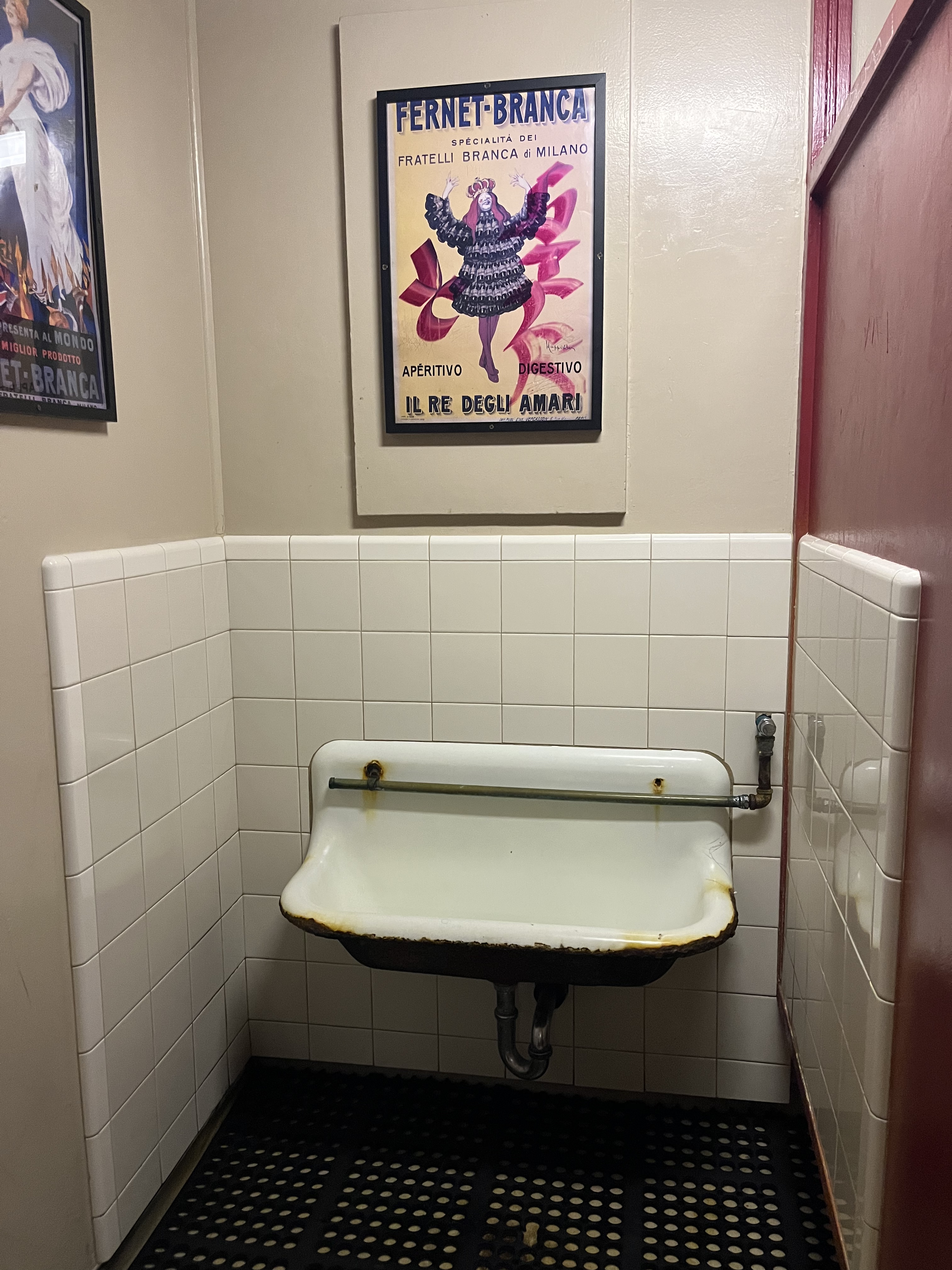
I think I was seeing things that I wanted to see. I wanted to see a connection to my White Sox. The place felt like such a South Side bar, down to the troughed urinals, that I thought it was home. Sure felt like it, which is hard to do 2,600 miles from Midway.
But I’ll leave the psychoanalysis to Freud. Lord knows he’s sick of picking apart 49ers fans.
It’s not that the words are hard to find to describe what Shan and I have been going through these past twelve months. I know exactly how I feel and what I want to say.
The difficult part is actually saying the words. The difficult part is how many words it takes to describe it. The difficult part is admitting to ourselves that we’re struggling in this difficult time.
We have been struggling. Shan is suffering.
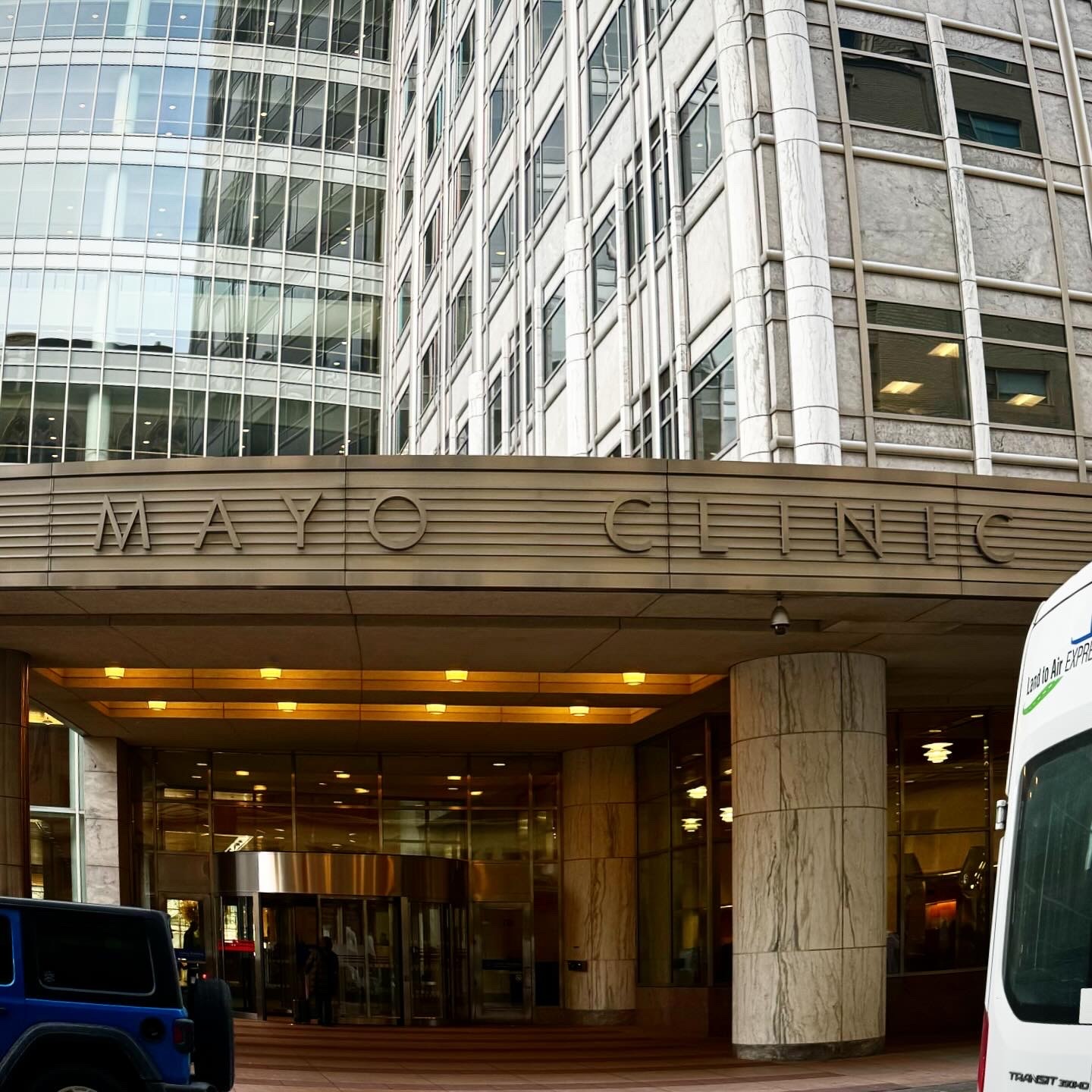
I’ve tried to remind Shan and myself that we don’t have to suffer in silence. I’m not sure I’ve been exactly practicing that, which is why I’m writing this. Going from blissful, energetic and adventurous partners to gloomy, exhausted and anxious caretaker and patient has really shaken our world, but we’re very optimistic after our Mayo Clinic visits that we have a plan moving forward to “get our Shan back!”
I am writing this to help you understand what is going on with her, what we’ve been going through, and where we’re at now. It’s been hard to communicate all of that because we have spent the last eleven months trying to figure that out ourselves. Up until last month, Shan’s illness had baffled everyone, doctors included. The not-knowing-what’s-going-on has been a huge mental and emotional strain on the both of us. I began writing this up two months ago, but decided to wait until after we visited the Mayo Clinic in Rochester, Minn. to best understand and relay what’s going on.
There’s an update at the bottom about our 2nd Mayo visit and more info on POTS and how it affects Shan.
Dec. 2021-Dec. 2023 Recap
Shan caught COVID in December of 2021. Her symptoms were bad for a few days but she got better. After that, she started feeling some mild, intermittent symptoms, like fatigue, dizziness, migraines and nausea. She got COVID again December 2022, and experienced a miscarriage at that time as well. After that, Shan really started to deteriorate.
Day-to-day, her symptoms control her life. She often wakes up with nausea, still feeling exhausted although she slept a good 8 hours. If she tries to get up too fast, she experiences lightheadedness and dizziness and feels like she could pass out and/or throw up. If she’d try to eat, she’d immediately feel full and/or nausea. Diarrhea is frequent, as are migraines.
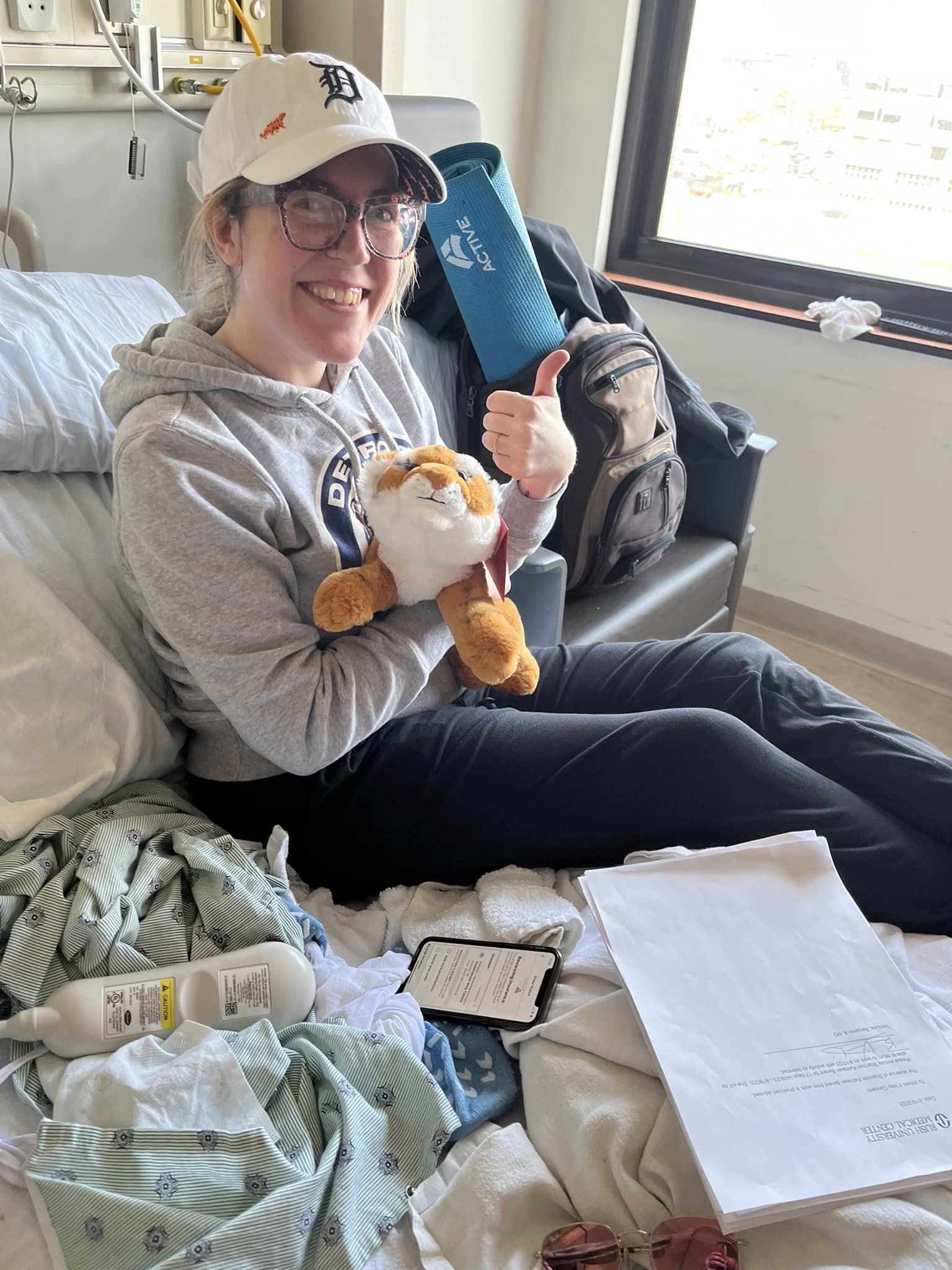
For months, Shan pushed herself to work though every day was a physical misery. She began to drop weight drastically and unintentionally–25 lbs in two months. She called in to work at least once a week. Then in April, she fell down the stairs while walking to the train and separated her shoulder. She spent 4 days in the hospital.
Shan with a stuffed tiger a friend sent her while she was in the hospital in April. Thank goodness she had the Tigers to distract her while she was there!
Since Dec. 2022, we’ve conducted all the tests, seen all the specialists. Some medication has helped, some hasn’t. She took a few weeks off and we tried a gradual return to work, starting with two-days-a-week and eventually getting to five. We got there in October, but we paid the price. Shan was pushing herself to the brink. She had now lost 50 lbs since December 2022. She could barely handle the ¾ mile walk to-and-from work every day. She crashed and her body shut down. She could barely get out of bed.
In late November, Shan was let go from her job. To their credit, her employer did a lot to cater to our situation and keep Shan on staff, but just couldn’t anymore.
MAYO Clinic – Bad Cop
Thanks to the urging of an old friend, we applied to be seen at Mayo Clinic back in October. By then, the one diagnosis we had was POTS (see more info below). After they initially scheduled to see us six months out, Mayo called back and said they can get us in at the end of November.
HALLELUJAH!
We went into Mayo with high expectations, which I blame myself for. My sister interned there in college. We watched the Ken Burns documentary on the Mayo Brothers. We were convince they were going to be our miracle.
Not quite.
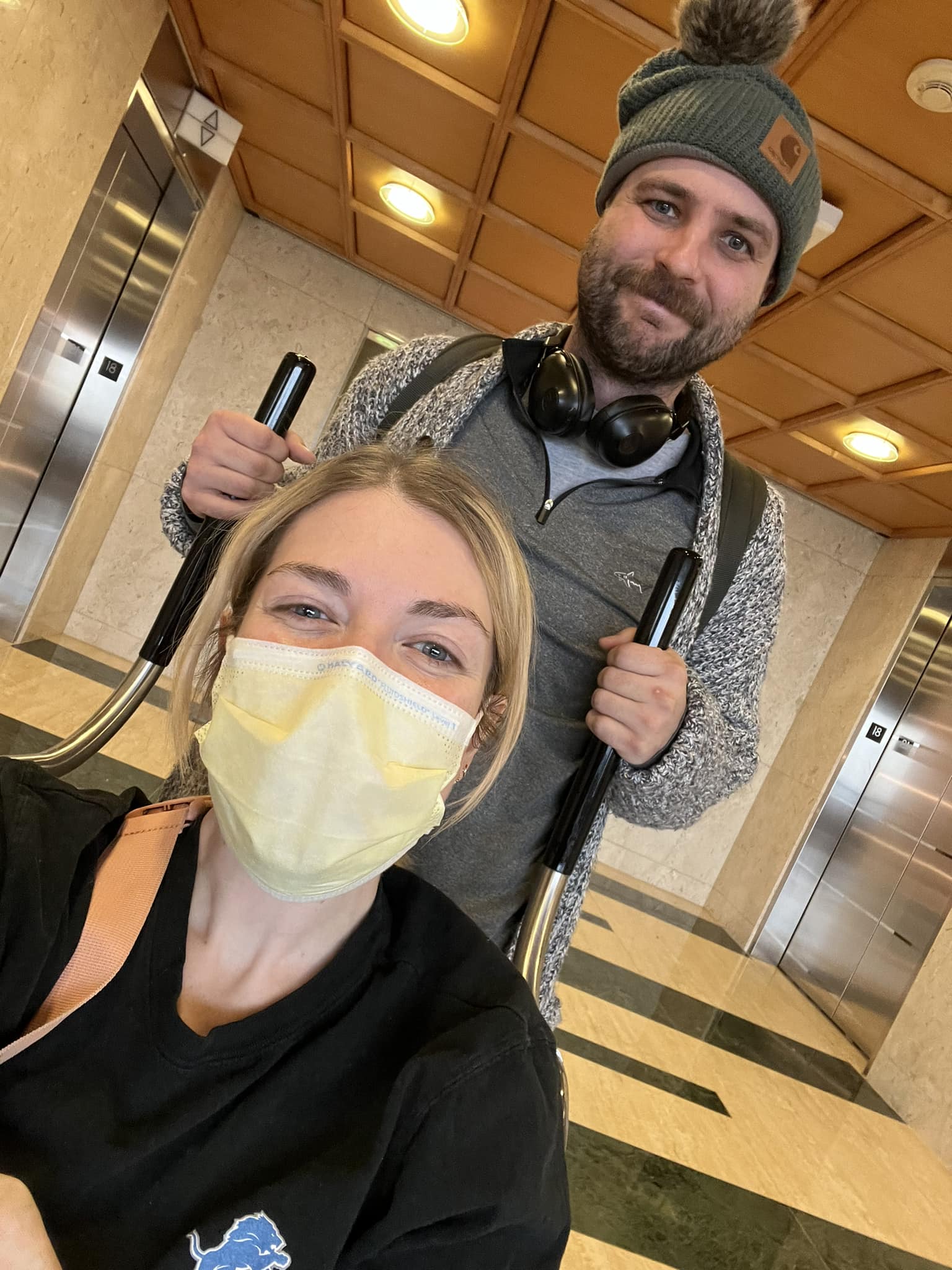
Our initial appointment with Neuorology was brief, and we left wondering if all our concerns were going to be addressed. She was impressive, intelligent and curt. She ordered tests, some of them the next day, some two or four weeks away. Wanting answers and wanting them now, we showed up every morning at 7 a.m. at Mayo Clinic to be a checker. Being a checker means you show up for a test you’re scheduled for right when the clinic opens, and you and sit and wait all day in hopes of someone not showing up so you can take their spot.
This was grueling and sometimes hectic as we budded up against our other scheduled tests, but the punctuality paid off. We’d planned on staying up at Mayo for three days, but that doubled to six. Didn’t matter. We got lucky and got all our tests done before our final appointment. Finally, our Integrated Medicine doctor who would tell us how everything is connected—her migraines, nausea, POTS, GI problems—and how we’re going to treat it.
Mayo Clinic – Good Cop
Exhausted and exasperated, we sat for our final visit. If our neurologist was our “bad cop” doctor, our Integrated Medicine specialist was our “good cop.”
He explained the reason we’re seeing him is because all of Shan’s tests—bloodwork, scopes, studies—have come back normal. It’s because all her other specialists we’ve seen to this point, tell her they cant find what’s causing all this.
He said her muscles and organs were functioning as they should physically, but the problem is her central nervous system is sending the wrong messages to her body. When she should be in rest-and-digest mode, her nervous system is sending messages to her body to respond in fight-or-flight mode.
The doctor made a clinical diagnosis of Central Sensitization. That presents itself in several ways, including POTS, chronic fatigue and fibromyalgia. Finally. Not only did we have a diagnosis, we had someone who understood our living hell the last 12 months.
He used a few great analogies to help us understand what’s happening inside Shan’s body.
Nuclear Bomb
Our eyes grew wide when the doctor started in with his first analogy.
“You’ve seen Oppenheimer? You’re familiar with a nuclear bomb? Well it’s like a nuclear bomb went off inside your body. Well, actually multiple nuclear bombs.”
He explained that viral infections and traumatic experiences sometimes trigger central sensitization. When Shan caught COVID the first time, that was the 1st nuclear bomb. It threw her whole body into whack. She was pretty healthy when that hit, so she bounced back, but “damage” was still done. She started to notice she’d get tired more easily, have less energy, and experience intermittent nausea. It forced her to call into work a few times, but she managed.
But when the 2nd COVID infection and miscarriage happened, that was a 2nd and 3rd nuclear bomb going off. That knocked her on her ass. She recovered from that in the first week of January 2023, but then started to slowly deteriorate over the next two months. Her body was rocked. Every aspect of her condition worsened. She became susceptible to infection, each illness delaying her recovery and sometimes sending her backwards. It’s been a struggle ever since.
Home Security Alarm
The doctor said imagine Shan’s central nervous system is like a home security alarm system. When a threat is detected, an alarm goes off in her body. It’s loud, piercing sometimes, and can take a while to turn off if you don’t know what’s going on. Shen’s security system is sensitive, and the littlest thing can set it off. Imagine your home security alarm firing off every time a squirrel runs across your front lawn or a bird lands on your roof—or sometimes for no reason at all!
That’s what central sensitization can be like at its worst. Her body is not communicating with itself correctly, and the responses are unpredictable, unavoidable and exhausting. In central sensitization, the central nervous system undergoes structural, functional, and chemical changes that make it more sensitive to pain and other sensory stimuli. In this pathophysiologic state, the central nervous system is hyperexcited even in the absence of sensory stimuli, and sensory messages are amplified, whether internal or external to the body. This amplification often leads to chronic, widespread, and migratory pain, chronic fatigue, sensory hyperresponsiveness, and many other symptoms. (5)
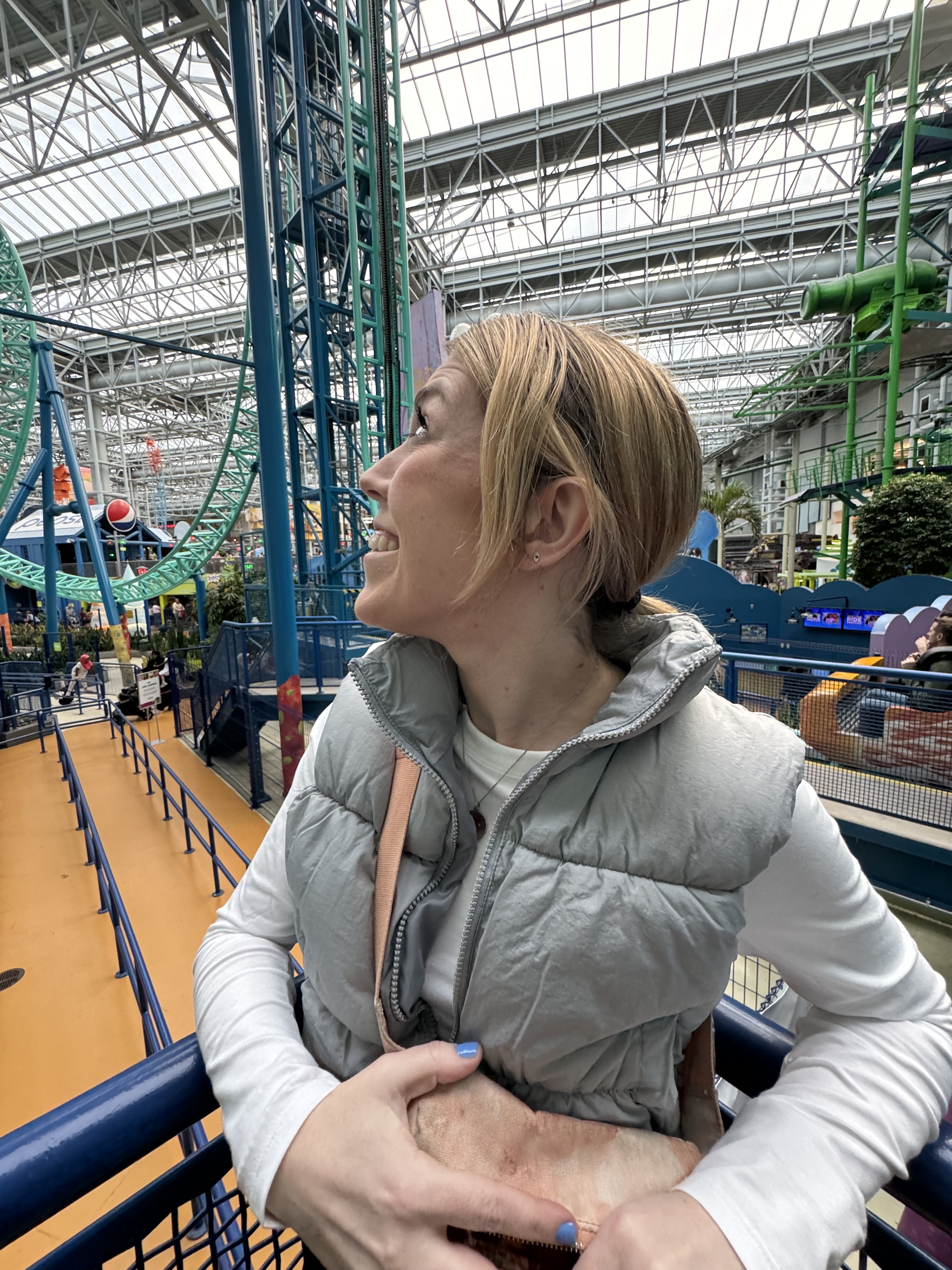
Waiting in line for the Spongebob roller coaster at the Mall of America.
Roller Coaster
Think about being on a roller coaster. Even though you see it coming, the most exciting part of a roller coaster is that first drop. It’s that split second after you crest the big lift hill and you’re eyes peer down at the fifteen story, near-90° drop. You brace for a rush of adrenaline and G-forces.
Now imagine you’re stuck on a roller coaster in that very spot. You’re about to fall over the edge, you could at any moment! But you don’t. Your body just tells you to brace for it.
That’s what the doctor described as sympathetic hypertization. The sympathetic nervous system connects the internal organs to the brain by spinal nerves. When stimulated, these nerves prepare the organism for stress by increasing the heart rate, increasing blood flow to the muscles, and decreasing blood flow to the skin. (4) Essentially, because her sympathetic nervous system is getting the wrong instructions and Shan is in a near-constant state of preparedness for the big drop.
Tree/Forest
Our Mayo integrated medicine doctor diagnosed Shan with a few things: chronic fatigue, fibromyalgia, POTS, and chronic migraines. He acknowledged but didn’t explain all our problems with a diagnosis, like her GI issues. That would come later.
He described Shan’s full slate of issues as a forest. Each piece of her condition is a tree in that forest. POTS is one tree. Chronic pain another. And each tree is a different size, depending on how its affecting her. Her GI issues tree is huge. Her migraine tree is currently small, though it used to be bigger.
“So far we’ve been going from tree to tree, with specialists to treat what they see. We need to adjust our approach. Instead of going after individual trees, we need to tackle the whole forest,” our doctor told us.
That’s why we were seeing integrated medicine. We need to go after the whole forest, and that means integrating disciplines and therapies, and that’s our plan moving forward.
The Plan
Finally, what we’ve been waiting for. Our plan to treat this horrible condition.
Shan quote, how’d you feel after the explanation and before the plan?
The road to recovery will be long and arduous, but it is entirely possible, our doctor explained. It’s a three-pronged approach: structural, functional and chemical. Our doctor explained a combination of medicine and several forms of therapy would be the path forward. It will include things linke walking with a cane, seeing a dietician and other stuff. We scheduled our GI tests and visits with Mayo ASAP because that was the most pressing issue that still needed investigation. But the first step of our plan was education. We needed to read, learn and understand Shan’s condition and the best way to treat it.Our doctor then asked if we had any questions. I had a few.
A Stroke of Kismet
Our doctor described the plasticity of the spine when talking about recovery and therapy. Plasticity is the ability of the nervous system to change its activity in response to intrinsic or extrinsic stimuli by reorganizing its structure, functions, or connections. (6) I was familiar with the concept, as explained to me about my own brain when I had a stroke. So I mentioned that to the doctor.
He paused a moment after my question. Then told me he suffered a stroke 6 years ago. What are the odds?
We’d connected with our doctor at the onset of the appointment as he’d talked about his time in Chicago, and asked genuine questions to get to know Shannon and myself. But this felt like kismet, serendipity. Like we were sitting in front of this very doctor for a reason.
He shared his stroke story. I then shared my stroke story. We felt a bond. We felt heard, seen and validated for the fist time. After 12 months of doctors trying in vain and piecemeal treatments, finally. Someone who totally understood Shannon physically and mentally.
One Last Question
I had one more question for the doctor.
From my perspective, it’s been a really tough time dealing with all this while providing the support Shan needs for recovery. Being a partner and a caretaker is hard. Instead of a 50-50 split of responsibilities and effort, it’s been 80-20 or 90-10 for the last 10 months. The worst part is not knowing how to help or what to do. My two main love languages—food and adventure—were neutralized. I struggle with being the ever-optimistic cheerleader and facing what the reality so often is. The doctors diagnosis and plan moving forward answered a lot of my question, so I figure I’d ask anyway.
“As a partner, a caregiver, what’s the best way I can be supportive or do you have any advice for someone in my position?”
What he said next, I’ll remember the rest of my life.
“Remember how she cared for you during your stroke?… You need to do for her exactly what she did for you.”
So that’s my plan. To be her everything.
Thank You and How You Can Help
I first want to say thank you for everyone who has reached out and shared their support for Shannon and myself. It takes a village and we wouldn’t be standing here today without ours.
Thank you to everyone who helped me organize a shopping spree for Shan at the Mall of America while we were up in Minnesota. After dropping 50 lbs in a year, nothing fits and Shan was soooo happy to go and pick out some new clothes. That was important for her mental health. When you look good, you feel good.
So how can you help?
Educate Yourself – If you’ve got this far, we love you. You took the time to read and learn about our experience and increase your empathy for people with central sensitization and related disorders.
Reach Out – This will be an uphill battle, and we need all the good vibes, motivational inspiration and emotional support we can get. She doesn’t always have the energy for activities or conversation, but especially since she’s not working the next six months, could use a distraction to break up her day. A funny video, an interesting read, a simple “thinking of you” message goes a long way for Shan. (And me too!)
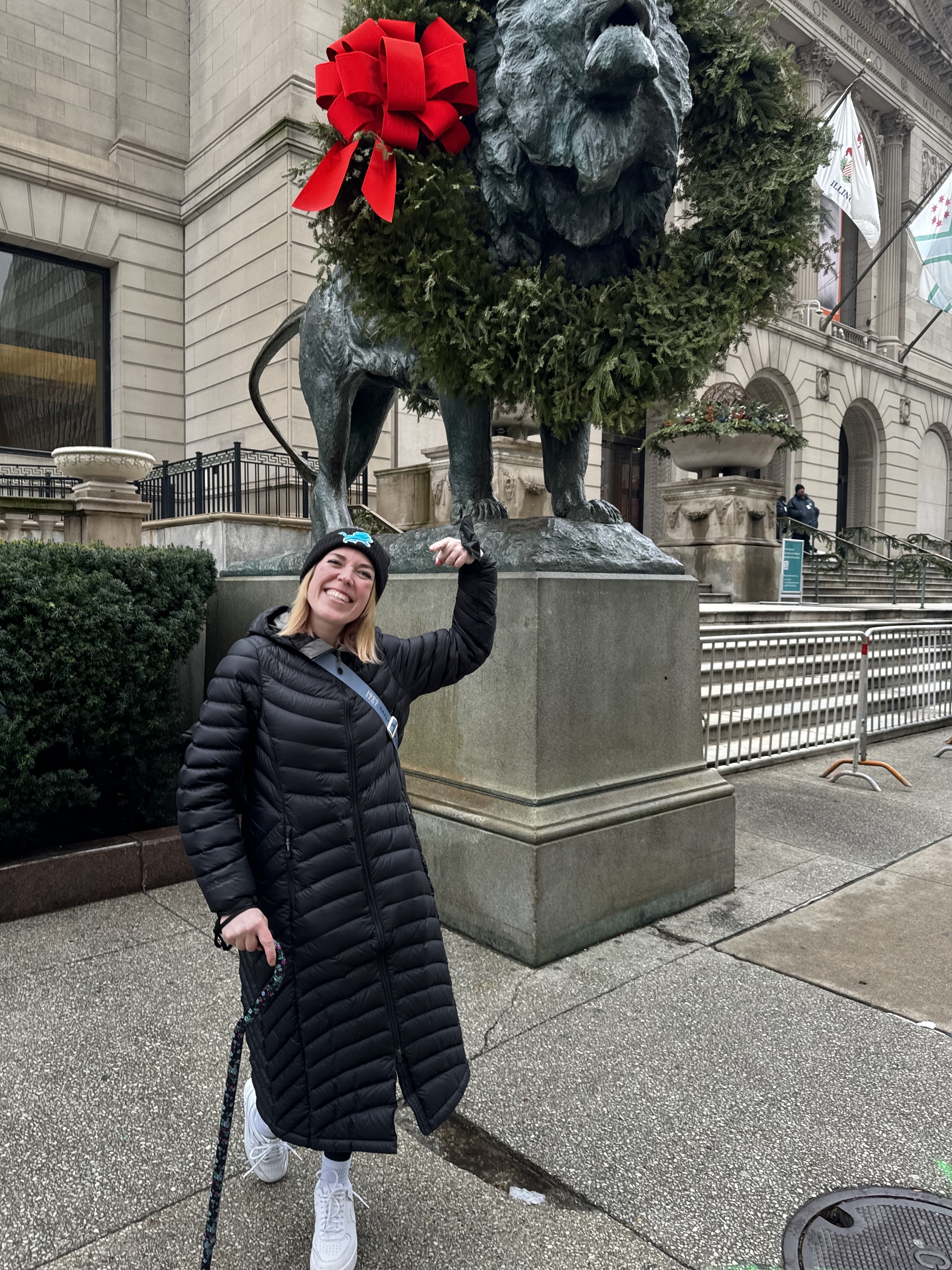
She makes that cane look good, don’t she?
Current Status
We spent another week up at Mayo to address Shan’s GI issues right before Christmas. We got another diagnosis for her GI issues: functional dyspepsia.
Functional dyspepsia is a term for recurring symptoms of an upset stomach that have no obvious cause. Functional dyspepsia is common. It is a constant condition but symptoms don’t happen all the time. Symptoms resemble those of an ulcer. They include pain or discomfort in the upper abdomen, bloating, belching and nausea. (8)
Shan is on some meds that should help her functional dyspepsia. We’re hoping increased accommodation will allow her to take in more water and nourishment and help the rest of her “forest.”
Shan bought a cane that’s been helping with her walking/standing for extended periods of time.
We’re doing our Mayo education sessions, and getting ready to begin some different kinds of therapy in January.
Shan was fired from her job, which is a blessing in disguise. She misses her work, work friends and daily purpose, but now the only thing she has to worry about is recover.
Our doctors advised we take it slow, so we’re not even thinking about getting Shan back to work until July 2024 at the earliest.
POTS Prolugue
To help you understand POTS, I broke down what you need to know and how it affects Shannon. I started writing this before Mayo and we got our other diagnoses, but its all relevant.
What is POTS?
POTS stands for Postural Orthostatic Tachycardia Syndrome, a type of dysautonomia disorder.
Dysautonomia is a disorder of autonomic nervous system function. The ANS is charge of involuntary functions—things that happen without thinking—like breathing.
Postural means having to do with body posture. (sitting, standing, laying, etc.)
Orthostatic means being in the standing position.
Tachycardia is the medical term for a heart rate over 100 beats a minute.
A Syndrome is defined asa recognizable complex of symptoms and physical findings which indicate a specific condition for which a direct cause is not necessarily understood.
So, POTS is autonomic nervous system disorder where someone can’t regulate/control their heart rate when changing postures.
Anyone at any age can develop POTS, but it mainly affects women between the ages of 15 to 50 years of age. Some women report an increase in episodes of POTS right before their menstrual periods. POTS often begins after a pregnancy, major surgery, trauma, or a viral illness. (1)
What are the symptoms of POTS?
The symptoms of POTS include but are not limited to lightheadedness (occasionally with fainting), difficulty thinking and concentrating (brain fog), fatigue, intolerance of exercise, headache, blurry vision, palpitations, tremor and nausea.(2)
Lightheadedness
When Shan wakes up in the morning and sits up in bed, her heart rate jumps anywhere from 20-60 beats per minute. That spike in heart rate induces her other symptoms, like lightheadedness, palpitations and nausea. It usually takes her anywhere from 10 seconds to a few minutes to feel well enough to continue.
Then, she slides to the edge of the bed and stands up. That usually makes her heart rate jump another 20-60 BPM. Same symptoms come back again. It again takes time to stabilize her heart rate and symptoms to subside. Sometimes, she goes from laying to standing too quickly, and everything comes like a rush, almost to the point of fading. So she’ll have to sit down, and slow down her process.
Exercise Intolerance
She can’t walk more than a half mile without needing to rest. Shan actually fell down the stairs in the Roosevelt subway and separated her shoulder in April because she was weak and lightheaded and fell.
Fatigue
I like to use the spoon analogy to describe how Shan’s energy level is every day.
People with chronic pain, she says, start each day with a set number of proverbial spoons, each one representing the physical and mental energy it takes to complete a daily task or activity. Smaller tasks, like showering or getting dressed, may cost regular people only one spoon, while larger tasks, like cooking or vacuuming, may take three or four spoons.
On most days, Shan has to use multiple spoons for smaller tasks. Some days, when she was still working, she’d feel like she was all out of spoons by the time she sat at her desk at work. (3)
Nausea
POTS patients also experience a wide array of noncardiovascular complaints, particularly gastrointestinal (GI) symptoms such as chronic nausea, vomiting, bloating, diarrhea or severe constipation. These symptoms are debilitating and have negative consequences as they limit oral intake of fluids and electrolytes, which is the core of POTS treatment. In severe cases, these patients may require intravenous parenteral nutrition or placement of a gastrostomy tube for feeding to treat severe weight loss and malnutrition. (7)
Anyplace that opens at 9:00am is a must-stop in my book. If they’re open at 9:00am, there must be some sort of crowd that comes in that early. 3rd shifters? Tourists? Neighborhood drunks? Or maybe not. Maybe the owner just wakes up and hangs out in the bar all day, then goes to bed after last call. The Tigers had a day game, and that made it OK to have a beer at 9:00am, and that made Abick’s the best option. Continue reading →
It’s really hard to put into words what makes a good dive bar. It’s kind of like the intangibles you hear football guys talk about all the time. Grit, toughness, perception etc. But another part of has so much to do with the cosmetics of a joint. How dim are the lights? Does it have a great name? How much of a hole-in-the-wall are we talking about? Still, you could say it’s what’s inside that counts. The regulars. Juke box and pool table. Busch Light on tap. No dive bar is the same. Yet, they’re all the same. All part of a wonderful American register of treasured drinking establishments.
I’m going to chronicle my time at dives in hopes of inspiring you all to simply see the world around you, every unkempt corner of it. Continue reading →
The Tuesday before the season of Lent goes by many names. Some people call it Fat Tuesday. In New Orleans, it’s Mardi Gras. But to me, and anyone who grew up within walking distance of a good Polish bakery, it’s Paczki Tuesday.
I have to have my paczki on Paczki Tuesday.
A paczki (POONCH-key) is dough, and fruit filling, covered in powdered sugar. Essentially, it’s a paczki is a jelly donut, right?
Brother, you’ve never been more wrong in your life.
Chicago sports fans make big, bold predictions all the time: Jay Cutler is going to have an MVP season. The Cubs are going to win the World Series. Derrick Rose is going to stay healthy this year.
Most of them never come true.
They also make smaller, more specific predictions: Rizzo’s going to hit a homer. Jimmy Butler is going to sink a game-winning three at the buzzer. Hawks are gonna get a power play goal right here.
While they have better odds, still most of them never come true.
But every once in a while, our prayers are answered.
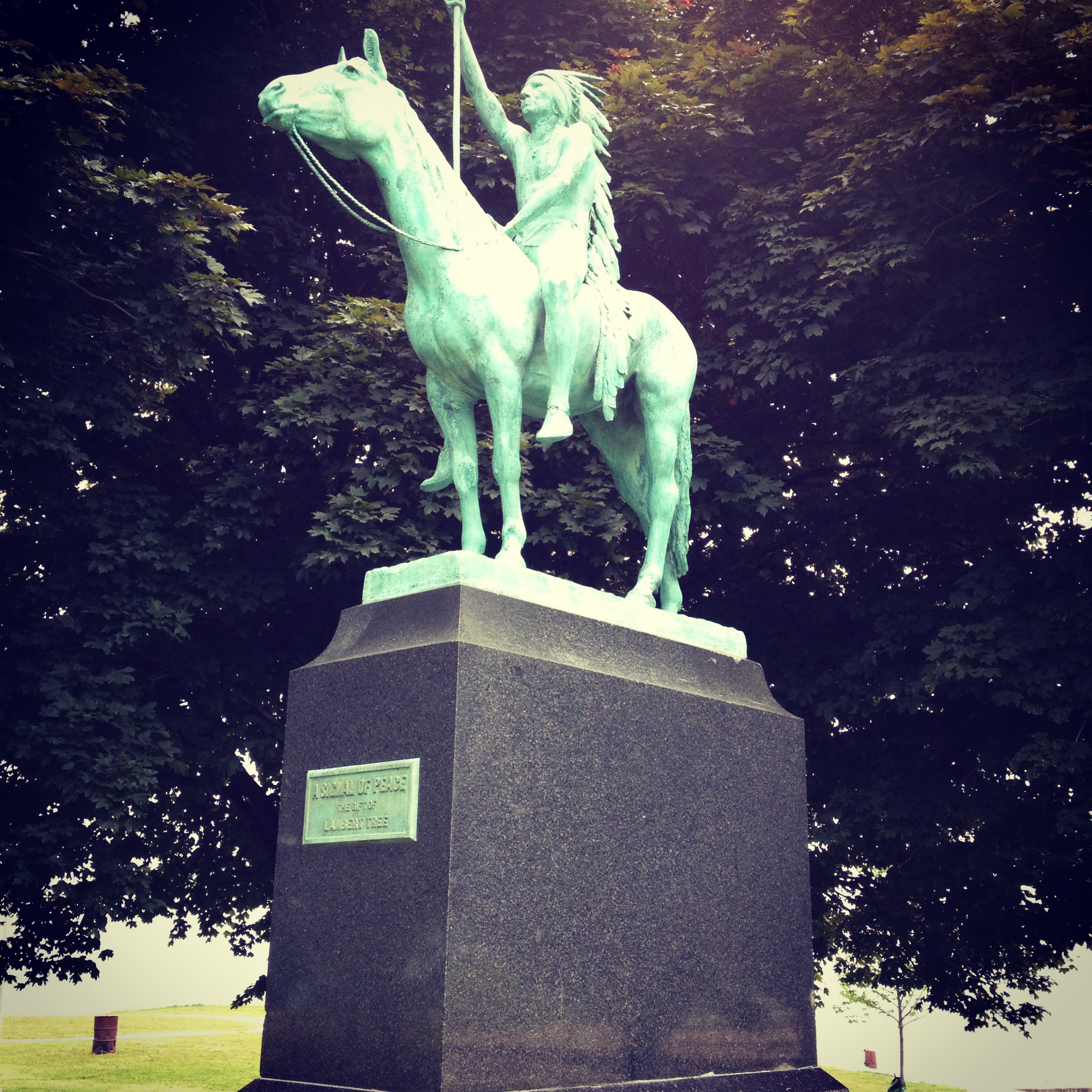
Blackhawk on a horse at Diversey and the Lake Shore Path
In 1892, Lord Frederick Arthur Stanley, 16th Earl of Derby and then Governor General of Canada gave a gift of a championship trophy to annually be awarded to the top amateur team in Canada. The generously sized bowl shaped trophy would eventually become known as the Stanley Cup, and the rest is history.
On May 16th, Chicago Mayor Rahm Emmanuel announced plans for a brand new 10,000 seat events center to be built at McCormick Place, with DePaul University being the facility’s primary tenant. Continue reading →
The CTA began their 6-month construction project on the south branch of the Red Line on Sunday May 19th. For the alternatives to the L Stops ranging from 22/Cermak Chinatown to 95th, Sunday was kind of a soft opening. There were few problems for riders.
The real test was on Monday, when the transportation lines would take on the full ridership of a work-week commute.
CTA commuters on Chicago’s South Side have been dreading May 19 for months.
The Red Line South Branch will close all stations south of the Roosevelt stop for at least five months in order to perform necessary repairs on the aging railway. This leaves everyday Red Line passengers to find other means to get around the city.
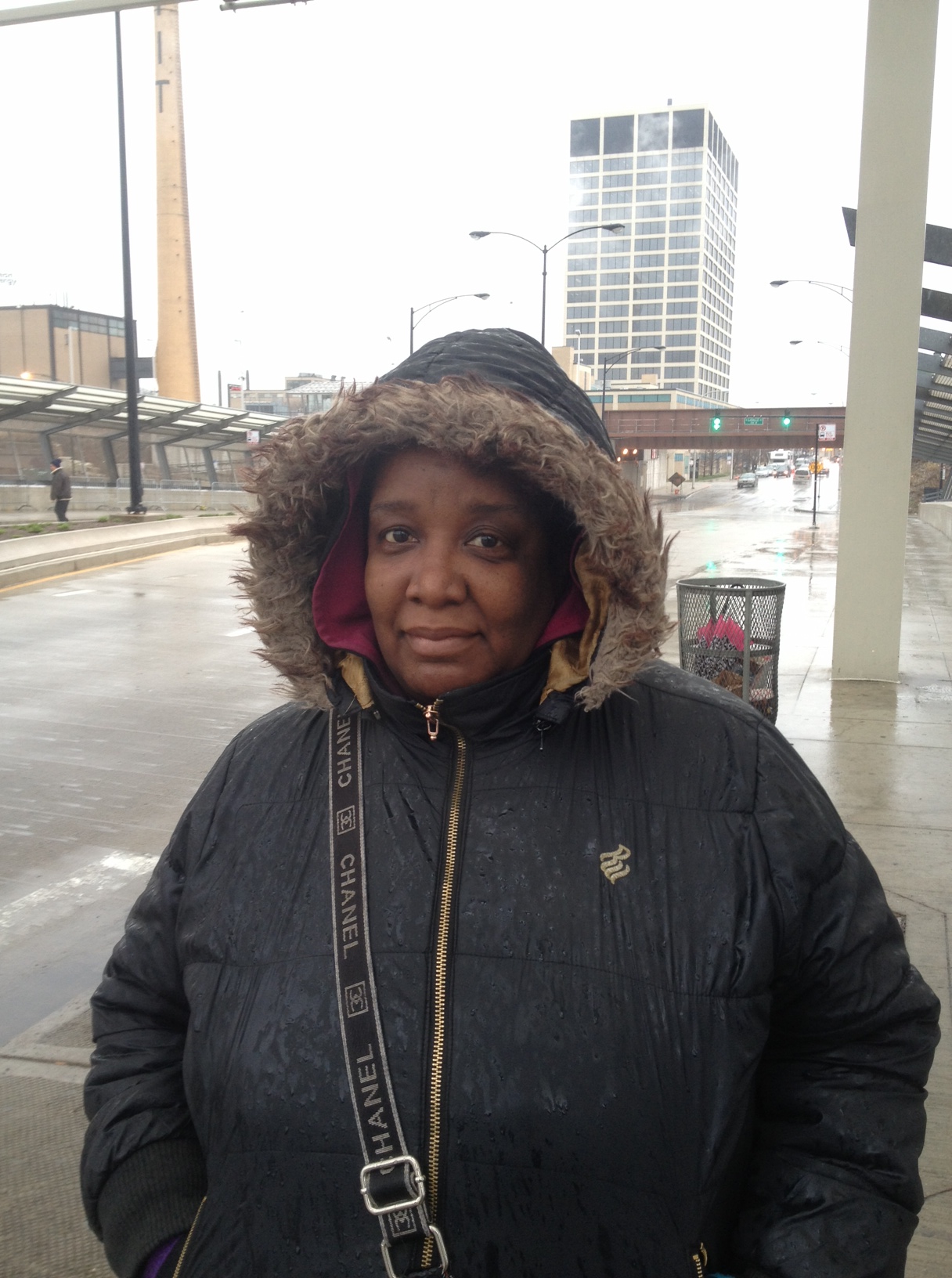
Carmella White ofAndersonville says she takes the Red Line daily all over the South Side to look for employment, visit friends, and go to church. White has reviewed the commuter options the CTA is offering, but is unsure if they will be enough to ease the burden.

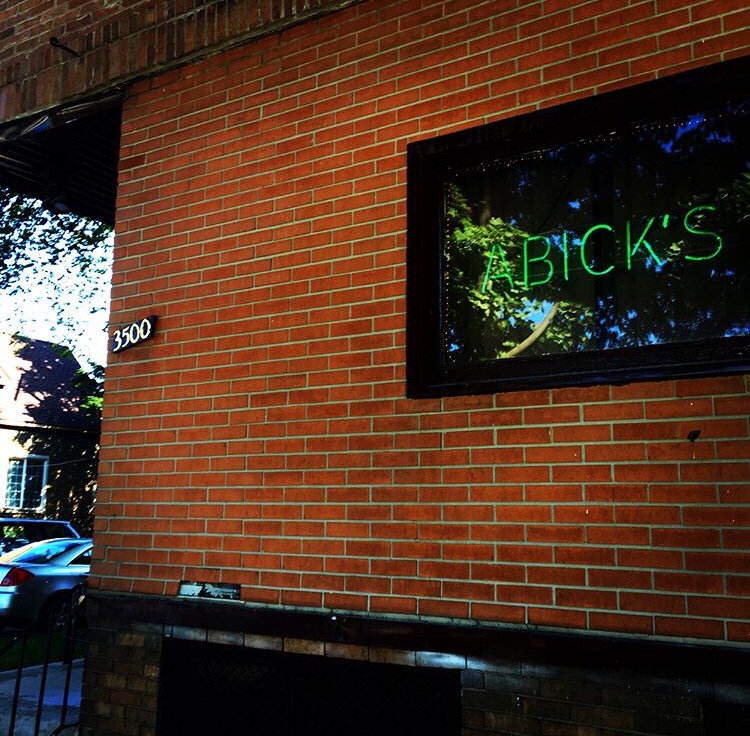 Anyplace that opens at 9:00am is a must-stop in my book. If they’re open at 9:00am, there must be some sort of crowd that comes in that early. 3rd shifters? Tourists? Neighborhood drunks? Or maybe not. Maybe the owner just wakes up and hangs out in the bar all day, then goes to bed after last call. The Tigers had a day game, and that made it OK to have a beer at 9:00am, and that made Abick’s the best option.


 Jake Berent